THEY HAVE THE EMOTIONS. YOU HOLD THE BOUNDARIES.
A calmer way to set limits, built on leadership instead of control.

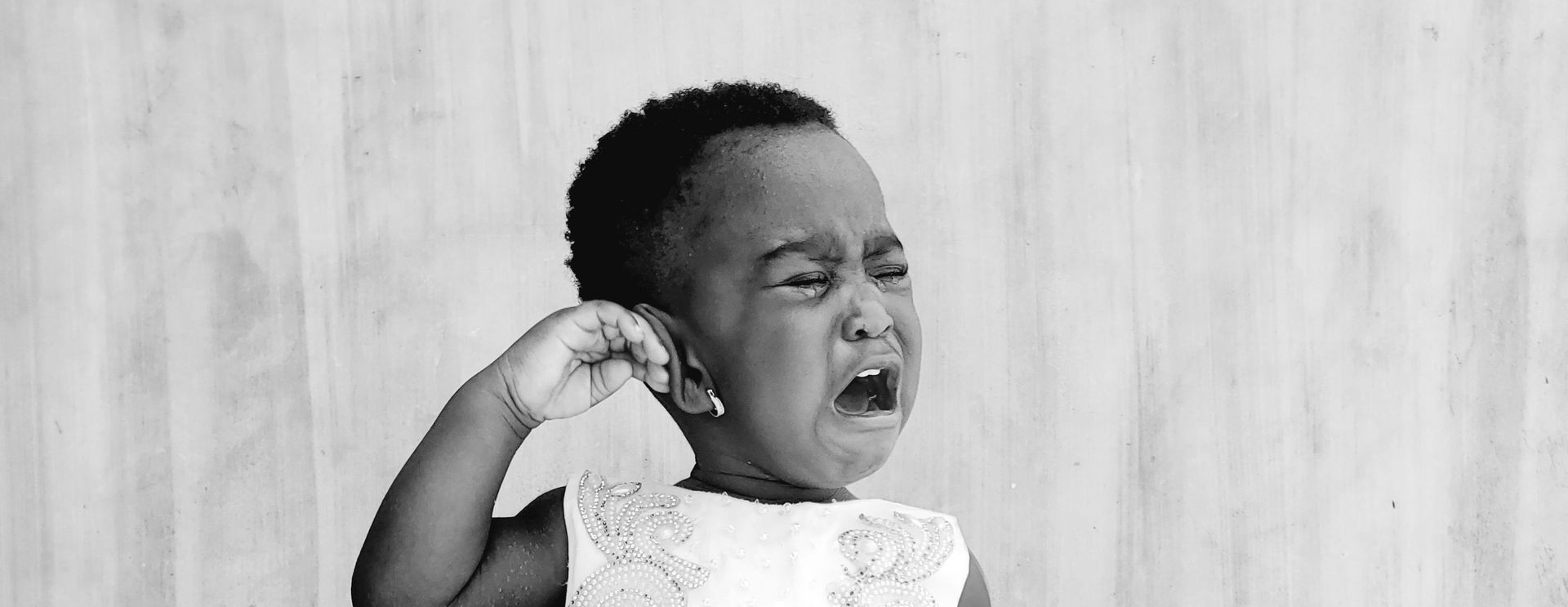
There is a moment almost every parent knows. Your child is in the thick of challenging behavior. Maybe it is a full hitting meltdown over something that, to you, seems small. Maybe it is the screen that has to turn off and the wall of resistance that follows. Maybe it is food going on the floor on purpose, or the refusal to leave the play place, or the heart stopping instant when they pull their hand free and run from you toward the parking lot. And somewhere in your own chest, you feel it start to rise too. The frustration. The clench. The voice that wants to get louder or sterner.
Some of these moments are genuinely about safety. But here is something worth holding onto: even real fear does not have to turn into unloving action. We can be deeply concerned for our child, we can take a boundary very seriously, and we can move quickly and firmly to keep them safe, all without dipping into harshness to make the lesson land. Urgency is not a reason to be unkind. We can be fierce about safety and still refuse to be emotionally, verbally, or physically abusive toward our child, all in the very same moment.
Here is the shift that changes everything: they have the emotions, and you hold the boundaries.
Those are two different jobs. Your child's job, in that moment, is to feel big things they don't yet know how to manage. Your job is not to feel those things with them, and it is not to talk them out of feeling them. Your job is to be the steady one. The calm, confident leader who is not rattled by their child's choices.
"I'm not bothered by my child's choices."
Read that again, because it is a quietly radical idea. I am not bothered by my child's choices. I am the strong, confident leader.
This does not mean you don't care. It means you have stopped handing your peace to a four year old. When your child refuses, resists, or pushes, you no longer experience it as an attack on you. You experience it as information. This is where they are right now. This is what they need help with. That is all.
The complication in parenting almost never comes from the boundary itself. It comes from trying to teach, correct, or lead while we are inside our own emotional storm. Frustrated, even when most people would be. Angry, even when it feels justified. Hurt, even when our child seems to know exactly which old wound to press. The truth is, you don't have to get pulled in. You can feel the pull and choose not to follow it.
Because here is what your child is actually doing when they push. They are asking a question with their behavior. At what point does my parent stop loving me? How big can this get before the connection breaks?
When we meet that question with our own escalation, we accidentally answer it in a frightening way. But when we stay regulated, we answer it the way they need. I am still here. I still love you. The boundary holds.
Why children actually want the boundary
It can feel backwards, but children long for boundaries. A clear, lovingly held limit tells a child they are safe. It tells them that someone bigger and more regulated is in charge, which means they don't have to be.
This is easy to miss, because in the heat of a tantrum it looks like your child wants the exact opposite. They are fighting the limit with everything they have. But watch what happens on the other side of a boundary that is held consistently. They pushed, the boundary held, and now they can let go. Now they get to spend that energy being a kid, being an explorer of life rather than our limits. They are free inside the firm boundaries, no longer required to test the edges.
When a child is left in charge, they don't thrive. They get busy. Busy feeling anxious, busy scanning for danger, busy managing a world that is too big for them. No child can relax into simply being a kid when they secretly suspect no one is steering the ship.
Think about what we are really asking of a young child when we hand them the wheel. We are asking a person who cannot yet tie their shoes to decide whether the family is safe, what the rules are, and how far is too far. That is a heavy job for a small nervous system. Some children respond by becoming defiant, testing harder and harder, not because they want to rule but because they are desperate for someone to finally say "I've got this, you can rest." Others go quiet and watchful, reading the room, managing the adults, trying to keep the peace so the floor doesn't fall out from under them. Either way, the childhood gets spent on a job that was never theirs to hold.
A boundary lifts that weight off them. When we stay calm and clear, we are essentially saying, you don't have to run this. I will. Your only job is to be a kid. That is not a restriction on their freedom. It is the thing that finally lets them feel free.
What happens when we get pulled in
Getting pulled in means we dip into the old authoritarian playbook. We get loud. We get scary. We threaten. We grab, squeeze, hit or use our size to overpower. We reach for emotional manipulation, withdrawing our warmth or making them feel guilty, all to control the behavior in front of us. It can feel justified in the moment, because it often works fast. But what we are really doing is borrowing cooperation against our child's sense of safety, and that debt always comes due.
And when we lose our own footing and get pulled into the storm this way, children tend to go one of two ways.
Some children comply. They shrink themselves to follow, doing whatever it takes to stay loved. From the outside this can look like success. The child obeys, the behavior stops, the house goes quiet. But compliance bought with our own anger teaches a child that love is conditional and that their job is to make the big person happy. They get smaller to stay safe, and we don't always notice the cost until much later. This is where people pleasers come from. A people pleaser does not give from the heart. They give to be loved. It can look like generosity, but underneath it is a survival strategy that started in childhood, back when being good and keeping the adults happy was the way to earn the love they needed to make it through. That makes it one of the most dangerous tools we can use to win cooperation, precisely because it works so well and costs the child so much. The grown up version gives until it hurts them, says yes when every part of them means no, and tends to everyone else while quietly neglecting themselves. They often don't really know who they are. And knowing yourself simply means knowing what you feel in each moment. You cannot track what you feel when your attention is locked on whether everyone around you is okay. That signal gets drowned out, because for that child, other people feeling good was the whole point. It was how the love arrived.
Other children defy. Not because they want to, but because their drive for autonomy won't let them back down, even when part of them wishes it could. You can sometimes see it on their face, the flicker of a kid who would take the off ramp if their body would let them, and can't. So they dig in. And the more we escalate, the more trapped they feel, and the harder they fight the very connection they are aching for. Over time, the defiant child can start to self loathe, to rebel, to wear the label of the "bad kid" like a costume they can't take off. They begin to believe the story the conflict keeps telling them, that they are the problem, that they are too much, that something in them is wrong. Once a child accepts that identity, they stop trying to be good and start trying to be consistent with who they think they are.
Regulate first, then choose
So how do we hold a boundary well? We start with ourselves.
The most important move comes before the non-violent (anti-harm) strategy you pick. It is the state you are in when you pick it. A boundary held while you are regulated lands as leadership. The very same boundary, delivered from anger, annoyance or frustration, lands as a withdraw of love. Same boundary strategy, completely different message.
Once you are steady, the question gets simple. Not "how do I win this," but "what would be most supportive to my child in this exact moment?" Then you pick the most supportive next step and you try it. You watch to see whether it is actually helping, and you stay honest that real change can take weeks, months, sometimes years. If it isn't working, you adjust. Part of what you are noticing is whether you are looking at a "can't" or a "won't," because a child who is too dysregulated to cooperate needs something very different from a child who is simply testing the limit. That read guides your response. Boundaries don't have to be complicated. They just have to come from a calm place and stay flexible enough to meet the child in front of you.
When you are calm, you have options. Here are eight of them.
Eight ways to hold a boundary
None of these require you to be angry, violent or manipulative. They only ask you to be present, firm and clear.
Physical intervention. Sometimes words are not enough, and your calm body becomes the boundary. Holding a hand so a child doesn't run into the street, blocking a toy mid throw, or scooping up an overstimulated kid and heading to the car is leadership, not control. Your presence says what words can't: you are not alone, and I will help you stay safe.
Clear communication. Children settle when they know what to expect. Set the expectation before the moment arrives. "At the store, there are breakable things. Hold onto my shirt and stay close." "After this show ends, it's time to turn off the TV." You can even role play a big event ahead of time so your child walks in feeling prepared instead of ambushed.
Positive motivation/consequence. Connect cooperation to a natural, related outcome using "when, then." "When we clean up, then we'll have room to build something new." "When homework is done, then there's time to play outside." It is not a bribe and not a threat. It is a clear picture of how one thing makes space for the next.
Reminders and redirects. A reminder is a short, calm cue instead of a lecture. "Walking feet" lands better than "Stop running." A redirect takes that same big energy and points it somewhere good. "Don't throw sand" becomes "Want to race me to the tree?" Both keep the connection intact and head off the bigger battle.
Scaffolding. Break a big task into small, doable steps so your child can succeed without drowning in it. Getting ready for school becomes "First socks, now shoes, now backpack." Over time they take more of those steps on their own, because they trust that support is there when they need it.
Accommodations. Meet your child where they actually are, without lowering the bar. A wiggly kid might need a movement break. An overwhelmed one might do better with a fidget in their hand. A little one might need a piggyback ride through a busy parking lot. Adjusting the environment is not giving in. It is setting them up to grow.
Logical consequences. Used gently and sparingly, these connect a choice to a related outcome. A thrown toy gets put away for a while. Screaming in the car earns a pause before the drive continues. These are not about making a child pay. They are structures that teach responsibility, and they work best when they come from clarity rather than frustration. If you find yourself reaching for them constantly, it usually means a need is unmet or more scaffolding is required.
Natural consequences. Sometimes life is the best teacher and your job is just to stay close and kind while it does its work. Refusing a coat may mean feeling cold. Forgetting the water bottle may mean using the fountain. Instead of rescuing or scolding, you let the gentle reality land while your warmth stays right there beside them.
You will not use all eight in a day, and you don't need to. The point is simply that once you are regulated, you have a whole toolbox that doesn't run on fear.
When boundaries are not the whole story
Yes, we need to hold boundaries. But if defiance, refusal, dug in heels, standoffs, and power struggles are waiting at every turn, then boundaries are being asked to carry far more than they should. They will do some of the work, but constant conflict is usually a sign that something underneath is going unmet. Before we can expect any major shift in behavior, we have to look beneath the behavior at our child's core emotional needs.
Children carry a set of core emotional needs, and most behavior is really a signal about whether those needs are being met. They need genuine connection and steady affection. They need to feel loved and accepted unconditionally, not only when things are easy but in the hardest, most trying moments, the ones where it would be easiest to pull our warmth away. They need their feelings validated and met with empathy instead of judgment, so their emotions stay welcome even when their behavior is not. They need security and trust, the felt sense that we are predictable, honest, and safe to come to with a mistake. And they need to know they belong and that they matter, that they are valued simply because they exist and the family would not be whole without them. When those needs are running low, no boundary strategy in the world will hold for long, because the child is not really fighting the limit. They are reaching for connection in the only language they have. Meeting those needs is not the reward we give after good behavior. It is the soil everything else grows in.
And there is a harder piece to sit with. If we have been showing up in harsh, violent, scary, or manipulative ways, the work is not only to set better boundaries going forward. It is to repair. That means owning it. It means holding ourselves accountable and taking honest responsibility for the fact that the relationship we have right now grew out of parenting choices we made from fear, even when we made them hoping they would serve our child. We are often here not because our child is broken, but because we have not yet modeled the values we want to pass on, and because we have been trying to manage their regulation without first mastering our own. That is not a verdict. It is a starting point, and it is one we can begin from today.
The boundary is the love
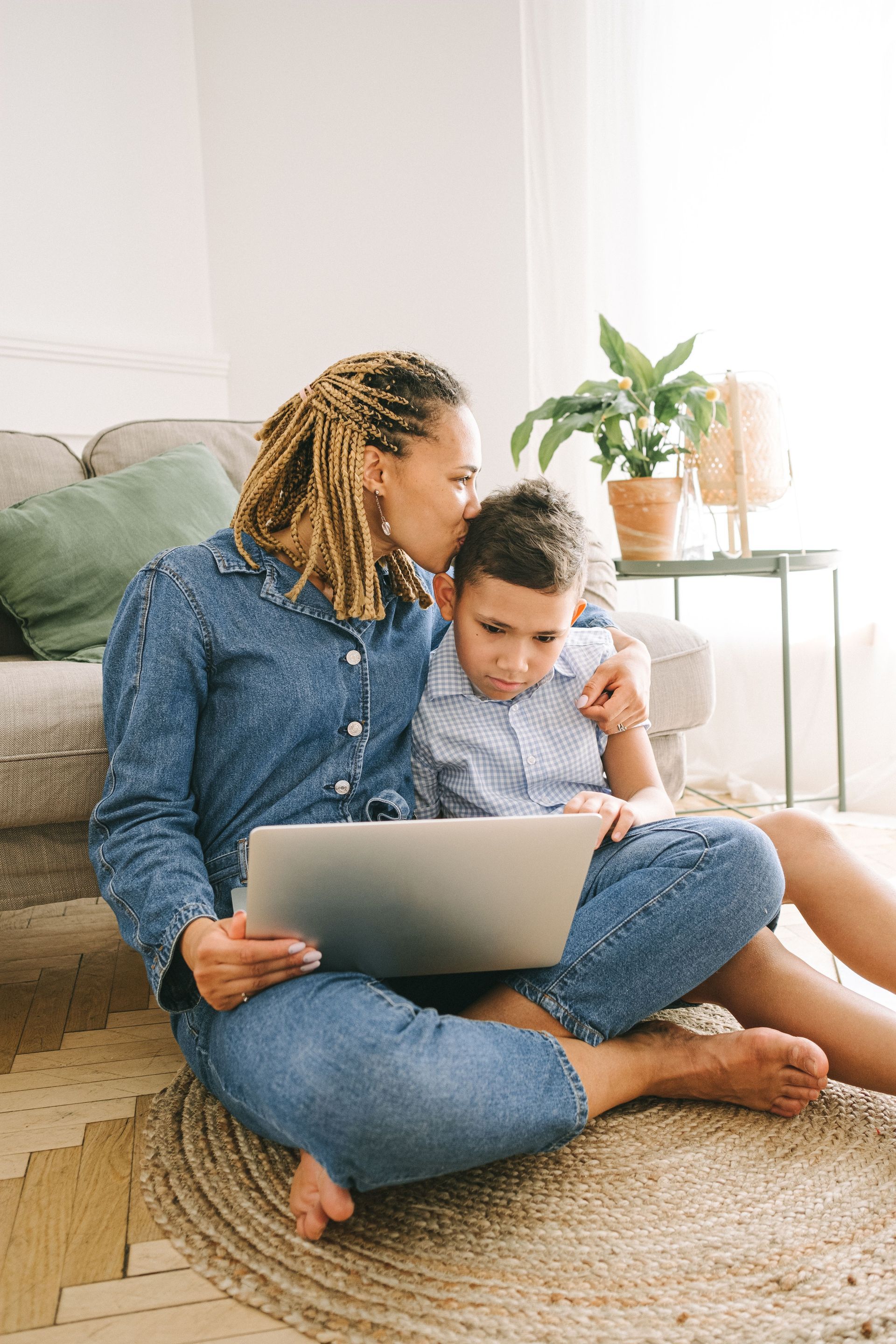
We tend to imagine a boundary as the place where love stops. A wall. A line our child must not cross, or else. But a boundary held with warmth is the opposite of a wall. It is a pair of steady hands. It is one of the most loving things we offer, because it gives our child something solid to push against and discover, again and again, that we do not break.
So the next time the storm rolls in, see if you can hear the two jobs in the room. Theirs is to have the feelings. Yours is to hold the line, and to hold it gently.
You don't have to control the weather. You just have to be the calm.
Reflection Questions
- When my child is in a storm and I feel that same heat rising in me, what helps me come back to calm before I respond?
- Which of these eight strategies do I already reach for naturally, and which one feels least familiar to try?
- What did boundaries feel like in my own childhood, and how might that be shaping the way I hold them now?
- The next time I feel myself getting pulled into a power struggle, what would it look like to stay the steady one instead?