EMPATHY IS NOT A TECHNIQUE
Validation and empathy were never meant to stop the meltdown.

A parent told me the other day, "I tried to validate and empathize, and it didn't work."
Good. It's not supposed to "work."
I know how that sounds. So let me explain what I mean, because this one little reframe changes almost everything about how the hard moments go.
What We Mean by "It Worked"
When we say a strategy "worked," we almost always mean one thing. The meltdown stopped. The kid calmed down, got logical, pulled it together, wiped their face, moved on. That's the measure most of us are quietly using in the back of our minds, even when we'd never say it out loud.
And by that measure, empathy looks like it fails constantly. You get down low, you say the kind thing, you offer the hug, and the kid keeps screaming. So you decide the gentle stuff doesn't work on your kid, and you go back to the threat or the countdown or the walk-away, because at least those make the noise stop.
But the noise stopping was never the goal. It's just the only measure most of us were ever handed, and almost none of us stopped to ask whether it was the right one.
Empathy Was Never the Off Switch
Here's the part that's easy to miss. Empathy and validation were never supposed to make your child rational. They were never designed to make them regulated, or reasonable, or done crying on your timeline. That's not the job they do. That was never the job.
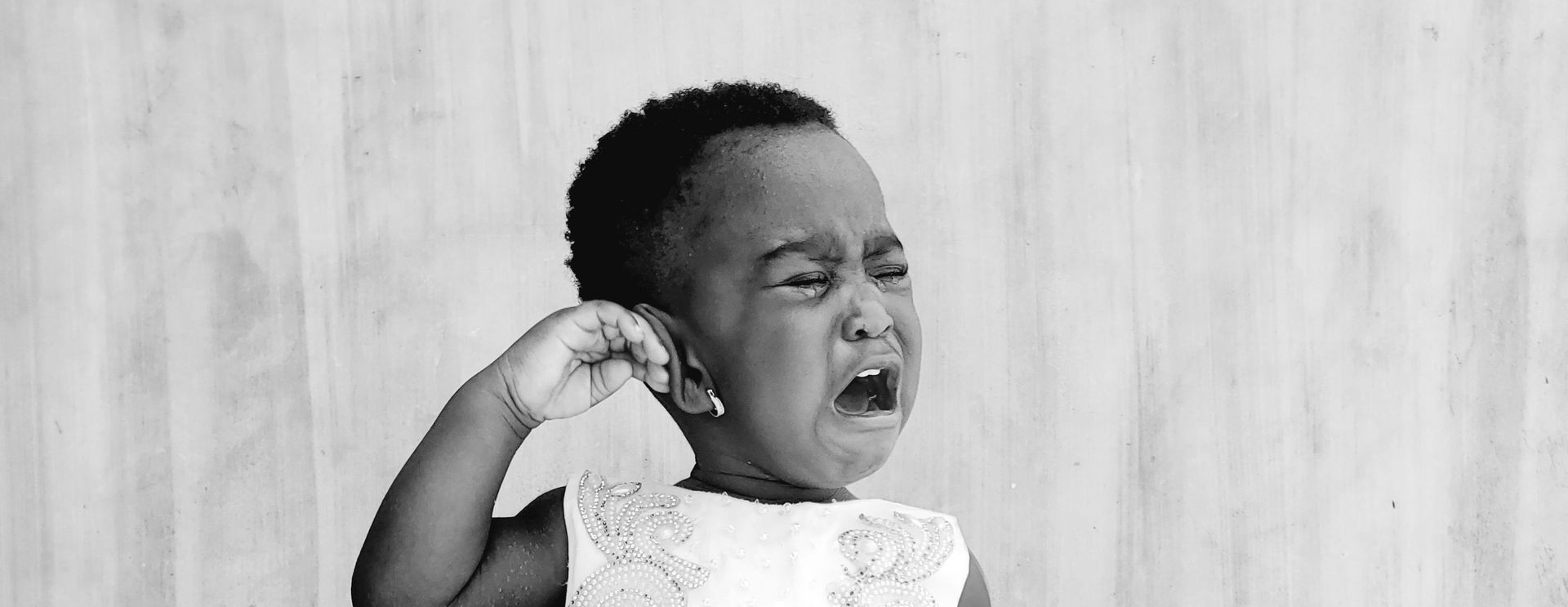
If you hand a crying four year old the most perfectly attuned sentence ever spoken, they're still going to cry. The feeling is still in there. Your words didn't drain it out. They were never going to.
So when a parent tells me empathy didn't calm their kid down, I'm not worried. It wasn't supposed to. Calm is not the deliverable.
Then What Is It For
So why do we bother at all?
Here's the logic. If we're not going to fix the feeling, and we're not going to make it stop, then empathizing and validating is simply what's left to do. It isn't a clever technique we reach for. It's what remains once we've taken fixing off the table.
Most of us believe the loving thing is to make the emotion go away. So we solve the problem, or we try to talk some sense into them, or we quietly shrink the whole thing down, it's not that big a deal, you're okay, all in the name of ending the emotional wave as fast as we can. It feels like love. A lot of the time it's our own discomfort wearing love's clothes.
But the most helpful, most loving thing we can actually do is let the wave wash all the way over them. And while it does, we empathize, "ugh, this is really hard," and we validate, "this really matters to you," which is really just our way of telling them the wave is real, that we believe how big it feels. That's it. That, plus keeping everyone safe while the wave moves through, is the whole job. There's no step we're skipping by not fixing it.
Keeping Everyone Safe While the Wave Moves Through
Letting the wave run all the way through never means letting anyone get hurt. We keep everyone safe while it moves through them, and that safety piece is exactly where a lot of us get pulled right back into trying to stop the wave.
When our kid hits us, or screams in our face, we very often slide right back into ending the wave instead of holding a firm, gentle, effective boundary around the behavior. The feeling is always allowed. What they do with their body while they feel it is where we hold the line, calmly and without heat. We're keeping everyone safe while they express, and over time we're helping them slowly build the skill of moving through a big emotion without causing harm. That skill gets built right here, in the thick of it, not lectured in afterward once everyone's calm.
What that looks like depends entirely on the kid in front of you. A loud child might just need a more private place to let it out. A hitting child might need their arms gently held, or their punches simply blocked, while you stay close and steady. A flailing child might need to flail, or to be carried somewhere they can flail freely, since we don't exactly live in a world built around a child's right to fall apart in public.
None of that is stopping the wave. It's keeping everyone safe inside it.
The Behaviors You Can't Put a Boundary Around
Some behaviors you just can't put a boundary around in the moment. We can stop a hand from hitting. We can carry a kid somewhere private. We can put the game away before it gets thrown across the room. But the scream right in your face, the insult, the "I hate you," the slammed door, there's no clean boundary to hold around any of those. They're already out before you could catch them.
So in the moment, we don't try to. We hold steady. We remember their goodness, even while they're aiming the worst of it right at us. We do our best not to take it personally, because it isn't really about us, it's the wave looking for the nearest shore.
And then later, often much later, once everyone is connected and regulated again, we teach. Not in the heat of it, when nobody can hear anything anyway. Later. We talk through what happened, the scenario, the choices, the other ways it could have gone. We practice new skills and new words for the next time a big feeling comes. It's slow, and it's completely free of shame.
A lot of that teaching isn't talking at all. It's modeling. We show them how to be mad, angry, frustrated, annoyed, by how we do it ourselves, in our relationship with them, and in how they watch us handle their other parent, our partner, the rest of the family. They learn far more from the anger they see us move through cleanly than from any lecture about theirs.
None of this changes overnight. But we don't need punishment or shame to teach a kid how to treat us. Little by little, they start to show up differently. More choice, more words, less and less harm to the people and the things around them. That's not a lesson you can force in a single hard moment. It's something you grow, slowly, across a thousand of them.
Picture It With an Adult
Picture all of this with an adult for a minute. The only real difference with a kid is the grace we extend. We quietly treat an adult's emotional life as the rational, worthy one, the kind that earns a soft voice and a hug, and we treat a child's as a phase to be managed and hurried through. A lot of that comes down to relatability. We can put ourselves in an adult's shoes. A breakup, a layoff, a hard diagnosis, we get why those hurt, so we decide the feeling is earned. A child crying over the wrong color cup just looks like a child being unreasonable about a cup.
But here's the thing we keep missing. Feeling was never about the worthiness of what you're feeling about. A wave is a wave. The lost cup and the lost job send the same flood through a body, and neither one has to pass some test of importance before it gets to be real. The size of the trigger has nothing to do with the size of the feeling, or with whether that feeling deserves company.
So let's actually try this with the adults too, because we're not as good at it as we like to think.
Someone tells you their relationship is falling apart and you want to jump straight to advice, here's what you should say to them, here's what I'd do. Someone loses their job and you want them to look on the bright side, you hated that place anyway, something better is coming. Someone's grieving and you want to remind them how lucky they were to have had it at all. All of it is fixing. All of it is a polite way of asking the wave to please move along.
Or you can do the other thing. You can extend the same space we're learning to extend our child and let the adult in front of you feel all the way through it. That sounds really hard. That sounds like it really hurts. Can I give you a hug? You don't fix it, you don't solve it, you don't talk them out of it. You just stand next to them inside it.
And here's what happens when you do. When they're actually done feeling it, there's a shift. They come back to their own rational brain on their own. They start to see the bright side themselves, without you handing it to them. They get to the solving, but only after the feeling has had its turn. Feel first, then solve. It works that way for all of us.
And with a child, the bright side grows up into perspective. We want to give them perspective so they can see their problem isn't really that big a deal. It's just a cup. Some kids have it so much worse. You'll have forgotten all about this by tomorrow. It feels generous, like we're handing them a wider view. But it lands as a verdict, that their feeling is too big for what's happening, that they've simply got it wrong. And the cup, remember, is their lost job.
A child is no different from that crying adult, except that they feel everything bigger than we do, with far less practice steadying any of it, and almost no power to change what's happening to them. If anyone's feelings deserve our patience and our empathy, it's theirs. We've got it exactly backward. We expect a five year old's storm to pass faster than we'd ever expect our own, and then we call it a failure when it doesn't.
What It Looks Like With a Kid
Here's what this actually looks like with a kid, the same move over and over, in the small moments that fill our days.
Screen time is over and your kid loses it. You don't turn the show back on. You also don't shame the experience, "stop being so difficult, you always do this." You don't diminish it, "this isn't that hard, knock it off." You don't demand obedience, and you don't threaten something they love to scare the feeling out of them. You get down low and you say, "You really wanted to keep watching. I know. It's so hard when something fun has to stop." He keeps crying. You stay. "I'm right here. You can be sad about this one. I've got you." The show stays off. The crying keeps going for a while. None of that means it failed, because making the crying stop was never the point.
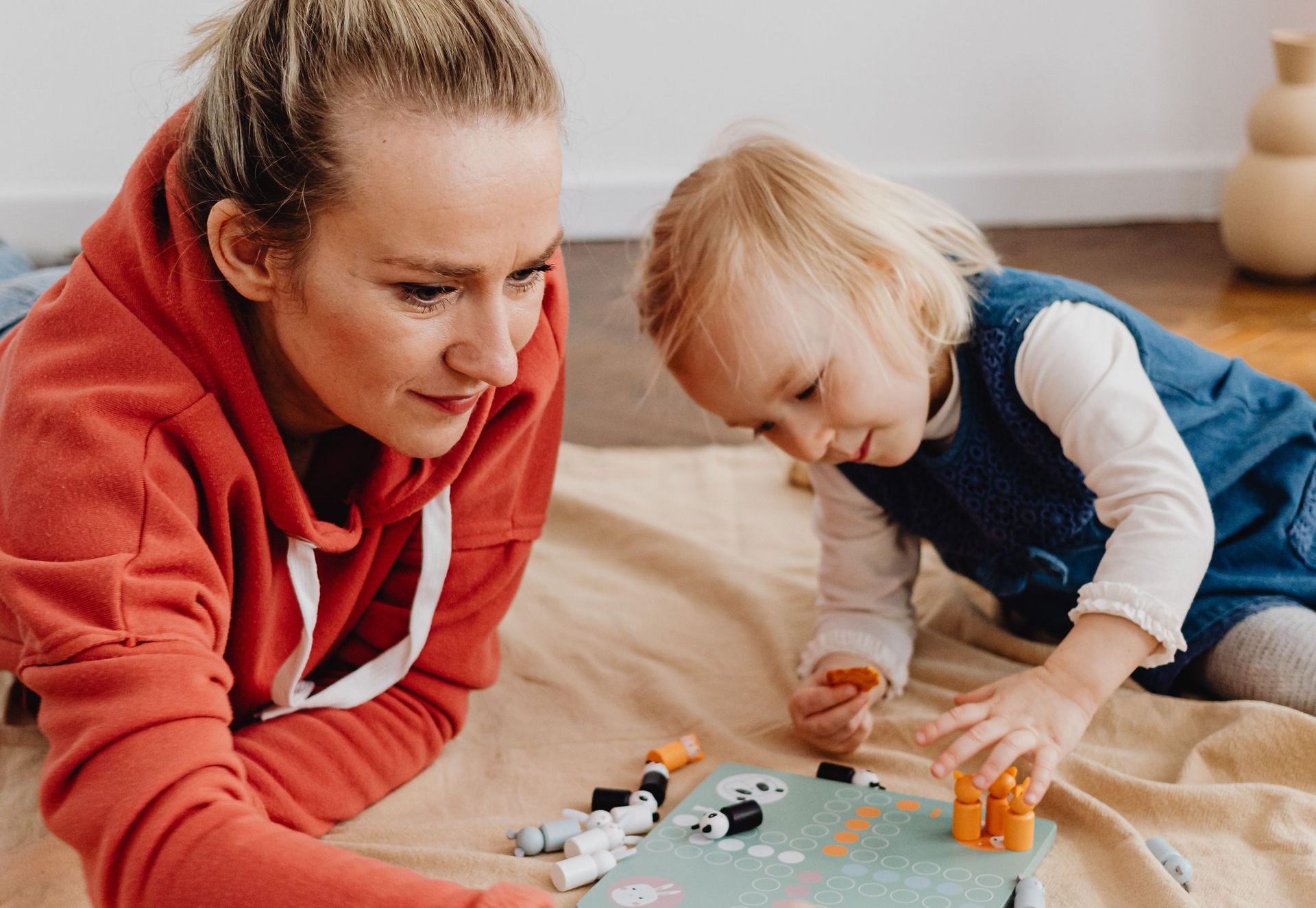
The tower of blocks falls over and she's wrecked about it. You don't rush in to rebuild it for her. You say, "Oh, that took you so long, and it fell. That's so frustrating." She wails. You sit down with her on the floor. You're not fixing the tower and you're not fixing her. You're just there.
Your kid wanted the blue cup and the blue cup is in the dishwasher. You're not running the dishwasher to get it. You say, "You wanted the blue one. I get it. The green one feels all wrong right now." He throws the green one. You hold the limit on throwing, and you still don't pretend his feeling is silly. Both things at once.
You say it's time to leave the park and the world ends. You don't add ten more minutes. You say, "Leaving is the worst when you're having this much fun. I don't want to go either." She goes limp and sobs the whole walk to the car. You carry her, gently, still leaving. The leaving and the empathy are not in conflict. They're happening at the same time, on purpose.
His sister got the slightly bigger piece and the unfairness is unbearable. You don't whittle the pieces down to the millimeter to make it perfect. You say, "You really wish yours was the big one. That feels so unfair." He's furious. You let him be furious, with the pieces exactly as they are.
Notice that in every single one of these, the limit never moved. Not once. The empathy didn't soften the rule. It softened the experience of running into the rule.
You're Not Walking Them Toward an Exit
Here's a subtle one that trips up a lot of well-meaning parents, myself included. Even once you've stopped fixing, you can still catch yourself trying to walk your child toward the exit of the feeling, and that isn't the job either.
You're not even helping them through the feeling, like there's some exit you're quietly steering them toward. You're not trying to get the emotion to go away on a slightly slower, nicer setting. You're giving them time and space to feel the whole thing, all the way to the end of it, on their own clock.
You're giving them the space to feel a feeling all the way through. Their timeline, their intensity, their work, their business, their emotional growth. Ours to witness, not to fix.
There's a version of empathy that's really just a more patient form of impatience. You say the soft words, but inside you're thinking, okay, that should do it, why are they still going. The kid can feel that. They can feel the difference between "I'm here with you" and "I'm here with you so that you'll hurry up." One is company. The other is pressure wearing a kind voice.
You're not the tour guide out of the feeling. You're the company inside it.
Why the Urge to Fix Is So Strong
It's worth being honest about why the urge to fix runs so strong in us, because it's not really about the kid.
When your child melts down, your own body lights up. Their distress is uncomfortable for you. And the fastest way to make your discomfort stop is to make their crying stop. So the urge to fix, to hand over the blue cup, to add ten minutes, to rebuild the tower, a lot of that urge is us trying to regulate ourselves by ending their feeling.
That's the move to catch. Before you reach in to fix it, it's worth a quiet check. Am I solving this for them, or am I trying to make my own discomfort go away? Because if it's the second one, the kindest, strongest thing you can do is stay regulated and let them keep feeling. You can handle the crying. That's actually the job. Not stopping it. Withstanding it, warmly.
When Empathy Becomes a Trick
One more trap, because it's a common one. Empathy stops working as connection the moment it becomes a technique.
If you're using the soft words as a covert off switch, a slightly more advanced tool to get the crying to stop, kids sense it almost instantly. They're experts at detecting whether you actually care or whether you're performing care to manage them. Validation as a strategy to end the feeling is just manipulation in a gentle outfit, and it tends to backfire, because now the kid feels both the original upset and the sense that you're trying to handle them.
The fix isn't a better script. It's actually meaning it. You really are sad with them. You really do wish it weren't this way. The honesty is the whole ingredient.
It's Just Information on Top
So what is empathy actually depositing, if not calm?
The point isn't even to make them feel good. Empathy isn't a smoother way to stop the cry. All you're really doing is reminding them of one thing. You love them. You care about what's happening to them. That's it.
And that reminder doesn't touch why they're upset. It doesn't answer the unfairness of the blue cup, or bring the show back, or stand the tower up, or make the bigger piece theirs. It just sits on top of everything they're already feeling. It's extra information, laid gently over the hard thing, not instead of it.
Two True Things at Once
From the inside, here's what your kid gets to hold. Not one feeling replacing the other, but two true things stacked at the same time.
"I'm having a really hard time. This is really challenging. I feel terrible. And my parents love me, and they care that this is happening to me."
That second sentence doesn't fix the first one. It was never supposed to. It just means they don't have to feel the hard thing alone.
So What Does It Actually Accomplish
If it doesn't calm them down and it doesn't fix the problem, it's fair to ask what all of this is even for. Here's what it's quietly doing, under the surface, every single time.
It tells your child there's nothing wrong with them. They aren't broken, or too much, or bad. They're feeling something hard, and that's allowed.
It tells them they're not alone in it.
It tells them your love isn't conditional on how they feel, that there's no version of this storm that costs them your warmth.
It tells them the connection won't disappear, which means the feeling itself is nothing to be afraid of. The big emotion can't take you away, so the big emotion is safe to have.
And when we hold those unshaming boundaries around hurting people, gently stopping the hit without a trace of "you're bad for this," we tell them something even bigger. We love all of them. Even the hitting parts, even the screaming parts, even the hardest, most out of control parts. There is no piece of them we're going to turn away from.
That's the Whole Thing Working
So when the validating and the empathizing don't make your kid calm down, don't get logical, don't pull it together on cue, take a breath. That's not the gentle approach failing.
That's the whole thing working, exactly the way it was always meant to.
Reflection Question
- When your child melts down, what does your body actually want to do in that first second, and whose discomfort is that urge really trying to end?
- What have you quietly been measuring success by in those moments, and where did you first learn that a feeling ending fast is the same as a feeling handled well?
- Think back to a recent limit you held. Did your kid hear "I love you, and the answer is still no," or did a "but" slip in somewhere and quietly cancel the first half?
- What would it actually take for you to stay in the hard feeling alongside your child without trying to walk them out of it, and what is it about that staying that feels so hard for you?