FEELING COMES FIRST
Being able to feel is the foundation of resilience, confidence, and growth.

Picture a boy at the baseball field, watching another kid crush a home run.
He wants it. He wants it so bad it hurts. And underneath the wanting is a whole storm he probably couldn't name if you asked him. Envy, because that other kid just did the thing he can't. Shame, because he hasn't practiced, hasn't put in the swings, and some part of him has decided that's his fault. A flash of anger at God, his parents or the universe for not handing him the talent. And under all of it, the urge to shrink, to disappear, so nobody sees how not-enough he feels right now.
We don't know the exact mix inside any one kid. But we can guess it's something like that.
And here's what he does with it, because feeling it straight on is too much: he gets angry. He sulks. He flings the whole mess outward, until somehow the pain is everyone's fault but his own.
And it isn't the first time. He's been asked before if he wants to play. We've gotten as far as signing him up, and this time he even shows up to practice. But watch what he does once he's there. He fields a couple of grounders and slides to the back of the line, because the fewer that come at him, the fewer he can miss. He takes the minimum cuts in the cage, because fewer swings means fewer strikeouts. He isn't stacking up attempts on the way to getting good. He's dodging failure, doing as little as he can so there's as little as possible to fail. And doing the least has quietly become the thing he does.
So we go to work on him.
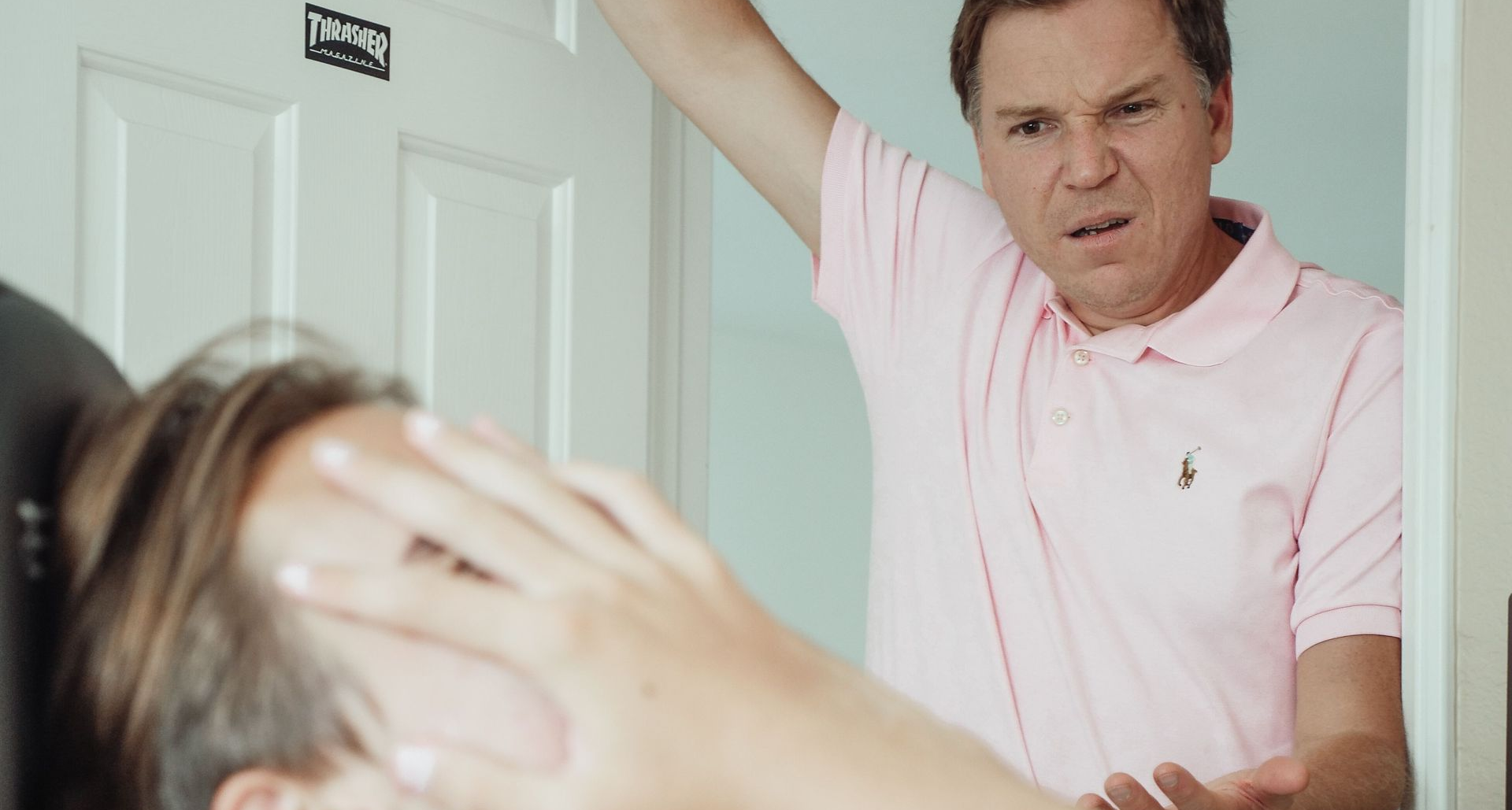
I can see the well-meaning dad already. "It's okay, bud, we can practice. I'll get you signed up, we'll start this weekend. You just set some goals and put in the work, and you'll get there. You're a sharp kid, and everybody's good at something." He wants to cheer him up. He wants to hand him better beliefs than the ones he's carrying. He wants to take the hurt away and put a good feeling where it was.
Here's the trouble. The exact thing Dad reaches for, the cheering up, the pile of positive feeling, is the same thing that's kept him hanging back this whole time. It's why he hides at the back of the line. It's why the moment a rep feels hard, he finds a reason to take one less.
It's all kind. It's all well meant. And watch what happens. Preventing his suffering is causing his suffering.
Kids feeling their feelings is the best use of their time. With us, not away from us. With our support, with our firm calm boundaries, with a steady adult who isn't afraid of the wave.
What's actually going on
He doesn't need a better mindset. Not first. He needs to feel the thing he's been running from. The envy, the shame, the not-enough, the disappointment, all of it, felt all the way through.
I'm not against the other stuff, by the way. Gratitude, reframing, growth mindset, those are good tools. They're just the wrong tool for this job. They're how you generate a positive feeling. They're not how you learn to feel a hard one. And those are two different skills. You can be world class at counting your blessings and still bolt the second something genuinely hurts.
So what does the right tool actually look like?
It looks like feeling sad. Feeling ashamed. Feeling envious. Sitting in those feelings and feeling them all the way down, as many times as it takes. No mindset work. No reframe. No reaching for gratitude or some higher understanding. Just the hard feeling, all the way through. With support. With a witness. With someone to listen and reflect and stay regulated while it happens.
Emotions are waves
Here's a way to picture the whole thing. Emotions are waves. They come in every size and shape, little ripples you barely notice and the big ones that pick you up and slam you down.
And a big one can break right on top of you. It can send you tumbling, hold you under, scrape you across the coral. In the moment it can feel like it's going to kill you. But here's the part worth getting all the way into your bones. It can't. The wave that feels like drowning has no power to drown you. The coral that feels like it's cutting you isn't real coral. The terror is vivid and the threat is imaginary. A feeling, however huge, cannot actually destroy you. It only looks like it can.
So the damage was never in the wave. The damage is in what we do to get away from it. We avoid it, and we miss the practice. We run from it, and we miss the practice. We brace and clamp down and try to suppress it, even though the wave was coming whether we tensed up or not. None of it makes us safer. It just keeps us from ever learning to swim.
That's the real danger. Not the feeling. Because when we won't feel a thing, our life slowly gets built around not feeling it. And the wave we refused to ride doesn't vanish. It gets absorbed, into our bodies, our health, our sleep, our temper. Or it gets pushed back out into the world, usually onto the people closest to us. The feeling we wouldn't carry becomes the mood our family has to tiptoe around.
The skill is easy to say and hard to live. We see the wave coming. We move with it. We sit down in it and let it do its thing. And we come out the other side, still here, every time.
How anyone gets good at this
We start out unable to even see them coming. Picture a two-year-old whose ice cream just hit the pavement. He can't read the size of this wave or how long it's going to last. He just got flattened by it. And here's the part that should stop us cold. He already knows how to feel it. Kids come into the world knowing how. Left alone, that two-year-old would ride the whole wave, up and down and out the other side, and get a rep in.
Except he usually has an adult standing right there who can't stand to watch the practice happen. An adult whose every move is quietly saying, even if the words never make it out loud, "I don't know how to tolerate discomfort, my own or yours, so stop it."
Children come into the world emotionally intelligent. The crying, the stomping, the red-faced wail over a dropped cone, those aren't malfunctions. That's the instinct working. Left to it, a kid moves through a feeling and comes out the other side. It's adults who train them out of it. Instead of offering a soft shoulder and an empathetic voice, one that acknowledges instead of fixes, we reach for reason, logic, and solutions.
And once you're looking, the moves are easy to spot, probably in yourself. "Stop crying." "You're okay, you're fine." "Quit yelling, go to your room." The swat that somehow arrives with the words "Don't hit." Or the gentlest-looking one of all, "Don't cry, I'll buy you a new one." Or we skip the feeling and jump straight to the lesson, "It's just ice cream, calm down." Most of us have said some version of every one of these. I have. They come out of love, mostly, and out of our own discomfort. We can't take the noise. We can't hold a boundary that's firm and kind at the same time. We can't stand to watch our kid suffer over something we could fix in two seconds. So we end the wave early, or we get good at heading the whole thing off before it starts. And every time we do, we teach the same quiet lesson: the feeling was the problem. A big wave is an emergency, something to shut down, fix, or flee.
So what is our job?
If it isn't to end the wave, or cheer them up, or hand them a better way to think, or keep them happy, then what is it? Fair question. The answer isn't obvious, and it isn't nothing.
So what are we actually doing? A few things, and not one of them is fixing.
The first is boundaries. When the feeling turns into harm, hitting someone, hitting themselves, throwing something that's going to hurt, we move in with a boundary that's firm and gentle at the same time. We block the hand. We hold the body. We keep everyone and everything safe, and we do it unbothered, without shutting the feeling down. The boundary lands on the behavior, not on the feeling. The feeling still gets to happen. The fist just doesn't get to land.
The second is reputation. While they're still riding the wave, sometimes the kind move is to change where they ride it. We don't live in a child-centered world, and a kid coming apart in the cereal aisle isn't always going to fly. So sometimes we move. Not to shut the feeling down, but to carry it somewhere it can keep running without a crowd. Part of that is the comfort of the people around us. Part of it is protecting our own kid, the version of them a room full of strangers would otherwise walk away with.
When we had guests over and one of mine started to come apart, I'd scoop him up and we'd head to the back room together and ride it out there. I was usually carrying him the whole way. We don't need to do that anymore, but for a good stretch that was the move. Same feeling, same staying with him, just a quieter room to do it in.
The third is coregulation. A child in a big wave doesn't have the wiring yet to bring themselves back down. They borrow it. They settle against a nervous system steadier than their own, and for a good while that has to be ours. Here's the catch nobody warns you about. Their wave pulls on us too. The crying, the flailing, the noise, it reaches right into our own body and starts to rock it. The job is to stay the steady shore anyway, or to find our way back to steady when we slip, because that calm is the thing they're regulating against. Emotions will dysregulate us, until they don't. The more reps we get staying grounded while a storm goes off in front of us, the less the storm can move us, and the more there is for our kid to lean on.
And here's the point of all that borrowing. It's how they learn to do it themselves. Self-regulation is built out of a thousand reps of coregulation, of being walked back to steady by someone steadier, until one day the steadiness is their own. Notice what they're learning, and what they aren't. They aren't learning to stop feeling. They're learning to feel something huge and not get hijacked by it, not flood all the way into fight-or-flight as if they were being chased down by a bear. They're widening what's sometimes called their window of tolerance, the band where a feeling can run hot and they can still stay themselves inside it, still have a say in what they do next. Feel the whole thing, and keep a choice in how you respond. That's the skill. And it's the same skill for us. It's the whole difference between a reactive parent and a responsive one.
The fourth is the one that keeps the connection alive in the middle of the storm: empathy and validation that doesn't try to fix anything. This is the soft shoulder. It's the voice that says, I see it, that really hurts, I'm right here. It doesn't reach for the lesson. It doesn't reach for the solution.
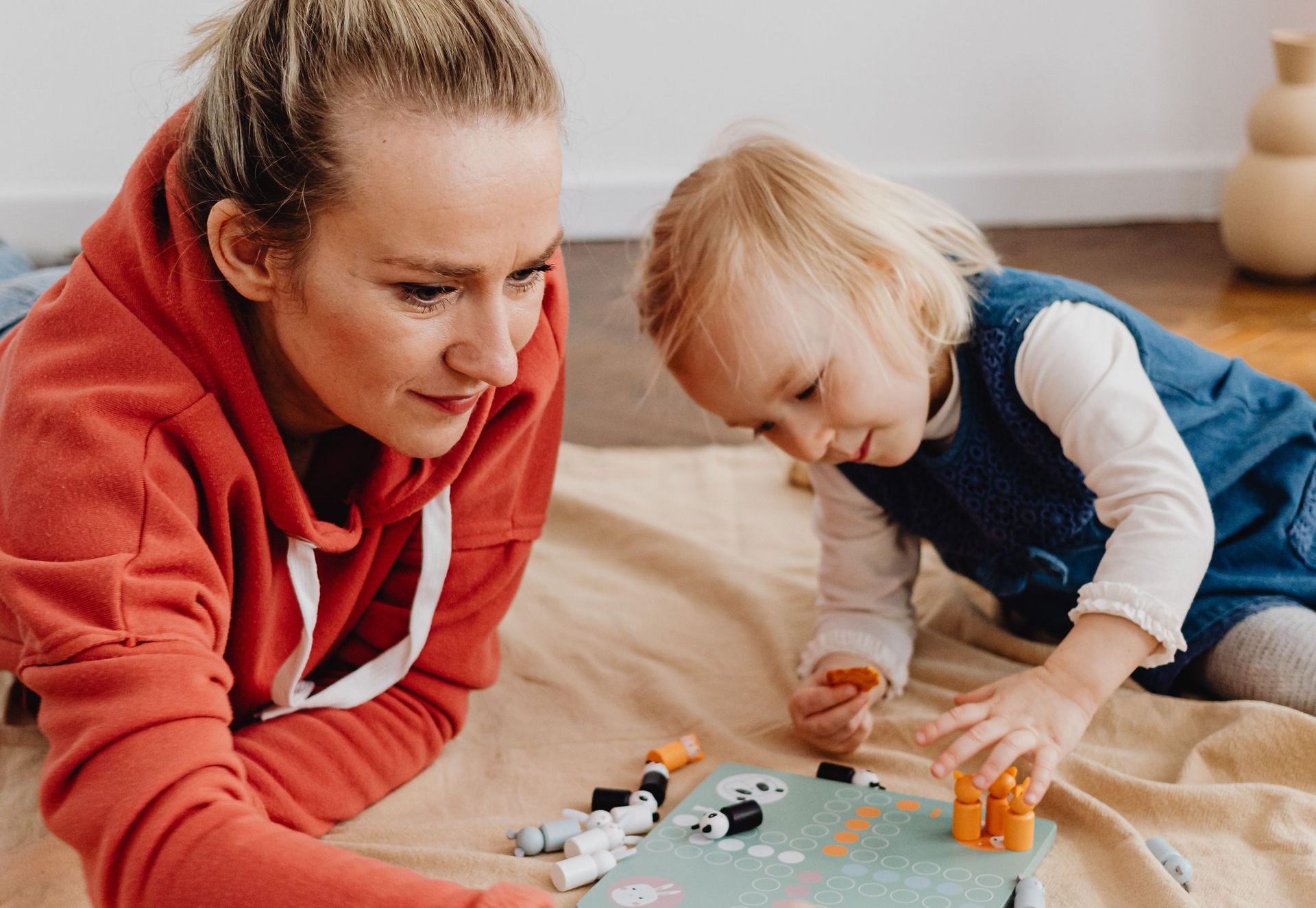
Empathy is your best guess at what they're feeling, said out loud so they aren't in there alone. "You're so sad right now." "This feels terrible." "This is really painful." You get down to their level and let your own face fall. You don't have to nail it exactly. You're reaching for the feeling itself and naming it, so they know someone is down in it with them.
Validation is naming what happened and handing them the right to feel about it. "You didn't like it when your brother hit you." "You fell and scraped your knee, and it really hurts." "Oh wow. You didn't get invited." You're not weighing whether their reaction is the size yours would be. You're telling them that whatever they're upset about, they're allowed to be upset about, even if you wouldn't be.
Together they say everything that matters in a moment like this. I understand. You're not alone in this. You're safe, I've got you. And the quiet one underneath all of them, the one a kid feels more than hears: you are not too much for me. Your biggest feeling did not scare me off. I can be with all of it, and with you.
What it looks like to let the wave roll through
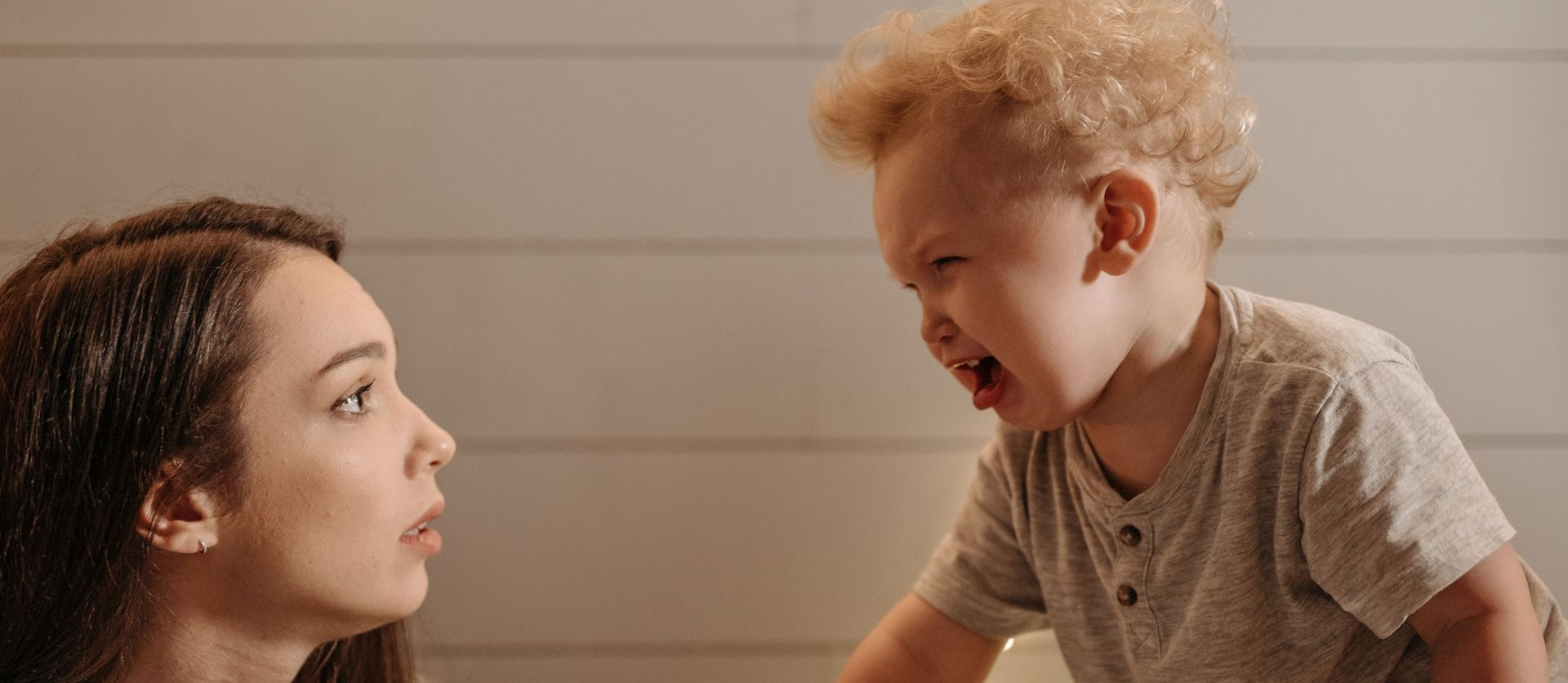
The ice cream hits the ground. The scream is instant, the tears right behind it, and he looks up at you with his whole face crumpled. You don't fix it. Not yet. You meet it. "Oh no. Your ice cream fell." You let your own face fall with his. "Ughhh, that is so disappointing." You kneel down beside him, or you scoop him up, and you just hold him. You set your own cone on the table and you sit. His head drops onto your shoulder and he keeps crying, and you let him lead. You're not hurrying him through it. You're in it with him.
And after a while, he comes back online. The wave moves through him and sets him down, still sad, in your lap. Now you can actually connect. "Would you like a little of mine?" Maybe he nods. Maybe he shakes his head no. Maybe the woman behind the counter is already scooping him a new one. Or maybe it's just a sad situation, no more ice cream tonight, and the two of you are going to hold that disappointment together for another twenty, thirty, forty minutes. And the whole time, you know exactly what's happening. This is the work. He's learning, right now, how to be disappointed and live through it.
It aches to do this. Of course it does. We're loving parents, and it hurts us when our kids hurt. But that ache is ours to feel, not theirs to manage. We feel it, we tend to our own hearts, and we stop quietly asking our child to stop hurting so that we can stop hurting. We don't have to fix everything. We offer what we can. We fix what actually makes sense to fix, after the feeling has been allowed to happen, not in place of it.
When it actually hurts
Here's another one. A child trips and bonks her head on the corner of the coffee table. The well-meaning adult is up out of the chair in a flash, scooping her up, pulling funny faces, tickling, anything to yank her attention off what just happened. Think about how disorienting that is. Something hurt. Her own body is telling her it hurt. And the biggest person in her world is acting like the move is to look away from it. That's how a child learns to stop trusting her own signal.
So let her feel that too. We'll deal with a real injury, obviously. But the everyday bonks and scrapes and bruises, let her be with them. Believe her when she tells you it's the worst pain there's ever been. "Ooh, that sounds like it really hurts. Let's get some ice and we'll check on it in twenty minutes." And in twenty minutes she'll be back up the tree, sizing up which branch is the one to jump from. Children need time to feel. That's most of what they need from us in these moments. Not the rescue. The time.
But how do they learn the rest?
Here's the honest answer. There's room for all of it. Growth mindset, goal setting, problem solving, the whole toolbox. It just comes after the feeling, not instead of it. And if you're like most of us, the odds are you're cutting the feeling short, not letting it run too long. Almost nobody errs in the other direction.
So here's the assignment. Err on the side of feeling. Even past the point where it's comfortable. You sit there with them, naming what's happening. You let yourself feel how badly you want to fix it. You might even know exactly how to fix it. And you wait. You let the wave finish before you reach for the lesson.
That needless suffering over the small stuff, the dropped ice cream, the bonked head, the lost game, the kid across the field doing the thing they can't, that's not the problem to be solved. That's the gift. That's the playground where they learn how to feel. Nobody actually gets hurt by losing a game or a scoop of ice cream, which makes it about the safest place there is to practice the one skill everything else gets built on. When we coach them out of the feeling, we think we're helping. We're robbing them of the rep.
So when my child is sitting in a hard one, I try to do less than my instinct wants me to. No bright side. No better way to see it. No fixing. I let them feel it. Because once they can feel it, they stop running from it. And a child who can stay with a hard feeling instead of bolting from it, that's a child you can actually teach. That's the foundation. Mindset, gratitude, goals, all the good stuff, it gets to be built on top of that, later, once the floor is there.
First feel. Then the rest.
That goes for them. It goes for us too.
Reflection Questions
- What's something you hang back from, taking the fewest swings so there's less chance to fail, and what feeling are you really avoiding by doing the least?
- When a hard feeling shows up in you, what do you reach for to make it stop, and what has that quietly cost you over the years?
- Think of the last time your child came apart over something small. Whose discomfort were you rushing to end, theirs or your own?
- Where could you err on the side of feeling this week, staying with the wave past the point of comfort instead of reaching for the fix?