WHY YOU SHOULD BE THE LOSER
The power of modeling of how to lose.
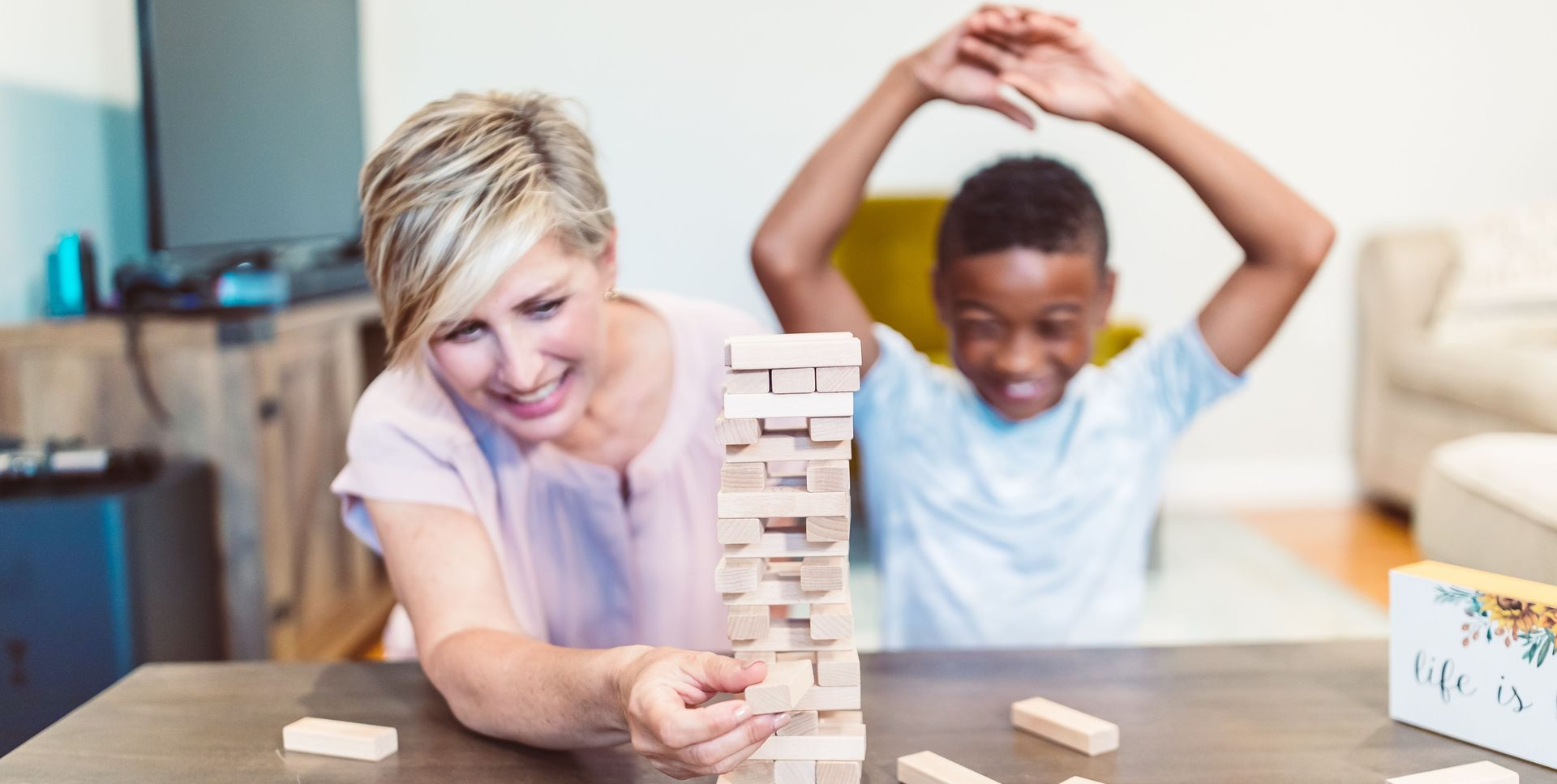
Here's a sentence that sounds completely backwards. In the early years, kids learn how to lose by winning.
Read that again, because it runs against everything our gut tells us. We assume a kid gets good at losing by losing, that if they just take enough hits, they'll toughen up. And there's truth in that, eventually. But early on, the thing that actually teaches a child to lose is watching us do it. They win the game, and they get to study what it looks like when the grown up across from them comes up short and stays completely okay. Still warm. Still smiling. Still glad to be exactly who they are.
This post is really about two things, and they're closely connected. The first, and the bigger surprise for most parents, is that it's not just okay to let your kids win and model losing, it's one of the most useful things you can do for them. There's a freedom in it that almost none of us were handed growing up. The second is what happens in the moments when losing gets too big to hold, because that's the doorway into something even more important than learning to lose. That's where they learn how to feel.
One thing to get straight right up front, though, because it's easy to take the wrong way. Everything I'm about to say about letting your child win, bend the rules, and lead the play is about a very specific kind of time. Intentional, one on one or two on one time, where it's just your child and you, or your child and a couple of adults who are there to connect with them. I am not talking about family game night, where one kid suddenly gets to rewrite the rules for everybody. I am not talking about the games at a birthday party with their friends. I am not talking about a team practice or a classroom. In nearly every other corner of their life, your child will not be the one setting the terms, and that is exactly the point. We carve out this protected little pocket of time precisely because it's so rare. It's their chance to work out winning and losing through play with us, inside the one relationship safe enough to practice in.
Let me take the two things in turn.
Why it cuts so deep
When a young child loses, it doesn't feel like "I lost a game." It feels like something is wrong with me. Their sense of self and the result are fused together. There's no gap yet between what happened and what it means about them, and that gap is something we build for them slowly, over years, mostly by living it out where they can see it.
If they never see someone lose and stay whole, still wanting to play again, still themselves, then they don't have a picture of how it's done. They're left to figure it out alone, in the hardest possible moment, while a huge feeling crashes through their whole little body. And without a picture, they reach the only conclusion available to them. Winning means I'm good. Losing means I'm not.
That's the real work hiding underneath the game. It was never about the game. It's about helping them pull their worth apart from the outcome, so a loss is just a loss, and not a verdict on who they are.
Start where they are
I coach jiu jitsu, and a lot of what I understand about this I first learned on the mat with three and four year olds. You don't throw a little kid into the deep end of losing. You start with fun, with roughhousing, with the adult being the one who keeps getting pinned. The way you teach a kid to lose is to lose, right there in front of them, and then show them you're still okay.
As a mom and a coach, I let young kids, and older kids who can't yet lose and stay regulated, set the pace. I let them lead, and tell me in their own way when they're ready to handle a little more failure and a little more loss. We let them win in those early years on purpose, again and again, while we quietly model what losing looks like when a grown up does it with a steady heart. Eventually they start to mimic us, and they find out for themselves that it's safe to lose.
Let them call the level
Here's a beautiful thing that happens when you let your child set the pace. One day, out of nowhere, they'll look at you and say, "try your hardest." And it'll catch you off guard, because for years you've been going easy, meeting them right where they were. Now they want more. And the only reason they can even ask is that somewhere in them they know you were never in this to win at all costs. They trust you, because you let them lead.
So you might raise an eyebrow and say, "My hardest? Are you sure?" And they say yes. And then you do it. You actually go your hardest.
And here's the part to hold onto. Whatever happens next is good. All of it. They might be thrilled. They might be stunned. They might get mad and yell "you cheated!" even though you didn't. They might pull back and say "okay, go medium," which is their way of saying make it a little hard, but I still want to win. Every single one of those responses is a win. It's just where they are right now, and where they are right now is perfect. You're not behind. They're not behind. They're exactly where they're supposed to be. And one day, going your hardest will simply be normal, not because you pushed for it, but because your child got good at feeling loss.
Let them change the rules
Remember the protected pocket of time we set up at the start, the one on one and two on one play. This is the part that lives there, and only there. Here's where a lot of well meaning parents tense up. We sit down to play, just us and our kid, and the moment they bend a rule or invent a new one halfway through or declare themselves the winner out of nowhere, we feel the urge to correct it. No cheating. That's against the rules. You can't do that.
Let it go, at least for now. Your child does not need to see you being a stickler for the rules, and they do not need to learn to play fair just yet. That comes later. Pushing fairness and rule following this early is the very same mistake as throwing them into the deep end of losing too early. We'd be asking for a skill they don't have yet. So first, we model. We stay flexible. We let them change the rules, make up new ones, move the goalposts, and win in ways that would never fly in a real game. That looseness isn't us being permissive. It's us building the safe, low stakes playground where they get to explore winning and losing on their own terms.
And here's the reassuring part, the thing that keeps this from tipping into a kid who thinks the whole world bends to them. While you're doing all of this in your protected time, leading with flexibility, letting them rewrite the rules and crown themselves champion, refusing to slap the word cheater on any of it, holding off on making everything scrupulously fair, life is busy lining up the other half of the lesson for you. There will be so many times your child is inside a game that is not about them. Birthday party games with a pile of other kids. Older cousins who play to win. A pickup soccer game at recess. A board game at a friend's house where everyone already knows the rules and nobody is bending them for the youngest player. In all those places, they won't lead, they won't set the terms, and they will lose plenty. The world hands out those losses freely, and it always will.
So you never have to manufacture hard competition for your child. They'll get more than enough of it. What you do get to manufacture is the opposite. The time you spend playing with your child, really playing, is the time to let them explore. To win. To lose. To change the rules and make the rules and adjust them on the fly. To feel all of it inside the safest relationship they have.
Why I lose on purpose
Let me be honest about something that's easy to misread. When I let my child win, I am not doing it so they can avoid losing. You can't avoid losing. Nobody can. Loss and failure are coming for all of us, plenty of times, in plenty of forms. I'm not trying to spare them that. I'm trying to make sure they know what losing looks like before life starts handing them the hard versions.
And here's the catch. I win almost everything against a small child. I'm bigger, I'm older, I've had more practice. So if I want them to actually watch me lose, I have to make it happen on purpose. Otherwise a whole young childhood slips right by without a kid ever once seeing their parent come up short and be okay.
Now picture the opposite. The parent who tries hard never to lose, who makes sure every rule is followed, who keeps everything fair, fair, fair. That parent usually thinks they're teaching integrity. But the message landing in the child is something else entirely. Winning is a really big deal. It matters so much we guard it this carefully. I need to win to feel okay. There's a time and a place for rules and fairness, of course there is. Just not everywhere, and not all the time, and not this young.
What losing sounds like
In case you're wondering what all this modeling actually sounds like out loud, you're going to laugh, because losing sounds an awful lot like winning.
Losing sounds like: Nice job. That was so fun. You did great. Can't wait to play again. And if it's true and it feels real, you can add a little honest disappointment in there too, something like, "Oh man, I was really hoping to win that one."
Winning sounds like: Nice job. That was so fun. You did great. Can't wait to play again.
Same words. Same warmth. Same face. That sameness is the lesson. You're showing them that your okay-ness doesn't ride on the scoreboard, and one day, without you ever sitting them down to explain it, you'll hear those same words come out of their mouth after a loss. That's the moment you'll know it landed.
Say the inside part out loud
There's one more layer to this, and it's the part most of us forget. A child can't see the work happening inside us. They can't watch us catch our breath, talk ourselves off the ledge, choose to be kind to ourselves, and decide to try again. All of that happens in a place they have no window into. So we open the window. We narrate it.
When you mess up, say it out loud. "Oof, I really messed that up. Okay. That's alright, everybody makes mistakes. Let me see what I can do about it." When something's hard, think out loud while you work it. "Hmm, that didn't work. That's okay. Let me try a different way." When the disappointment hits, name it and ride it where they can hear you. "Man, I really wanted to win that one. That stings a little. I'm just gonna feel that for a second. Okay. It's passing. It was still a really fun game."
That's the whole emotional process, made audible. The feeling shows up, you name it, you let it move through you instead of around you, and you stay kind to yourself the whole way. Pay special attention to the voice you use on yourself when you fail in front of them, because that's the exact voice they're going to install for their own failures. Kids don't inherit the voice we wish we had. They inherit the one they actually hear. So let them hear the kind one, even when, especially when, you have to reach for it on purpose.
If they're a sore winner or a sore loser
If your child falls apart when they lose, or brags and rubs it in when they win, that's not a character flaw to correct. It's a quiet signal that their self esteem is running low and they're reaching for external validation to feel good about themselves. The medicine is the same either way. We model how to lose, and we model that when we lose, we're still the same awesome person we were five minutes ago.
If your natural style is to playfully antagonize, tease, or trash talk, just hold off on that for now. Save it for later, once your child can lose and stay regulated, once they can tell the difference between losing a game and losing their footing. There's a time for that good natured ribbing between people who both know they're loved. It comes after the foundation is poured, not before.
When the feeling gets too big
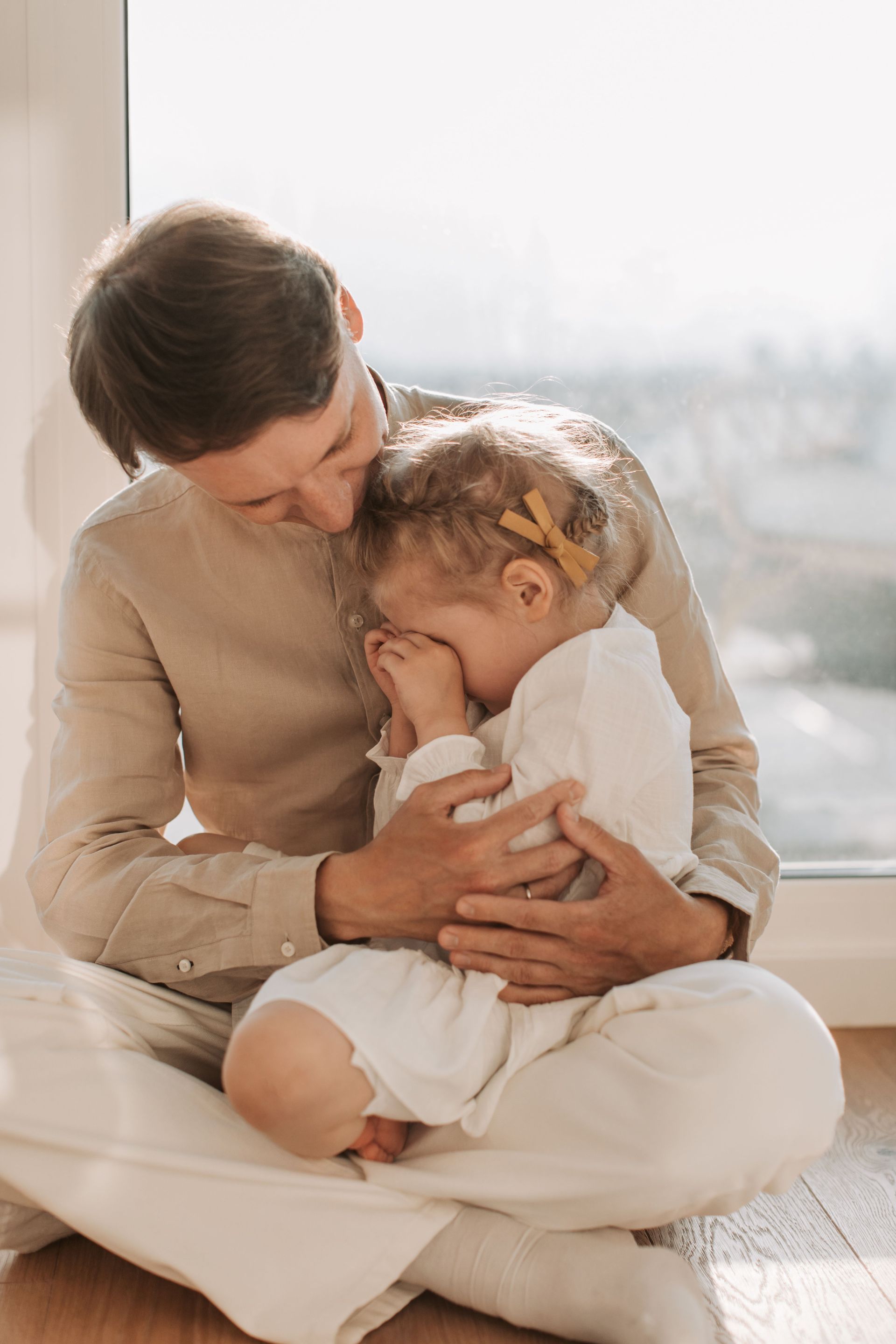
Which brings me to the second thing, and it's the deepest, most important work we do as parents. Sometimes your child loses and simply cannot handle it. The feeling is too big. They cry, they rage, they crumble. And those moments, as hard as they are to be in, are a doorway into allowing a child to feel deeply and thoroughly.
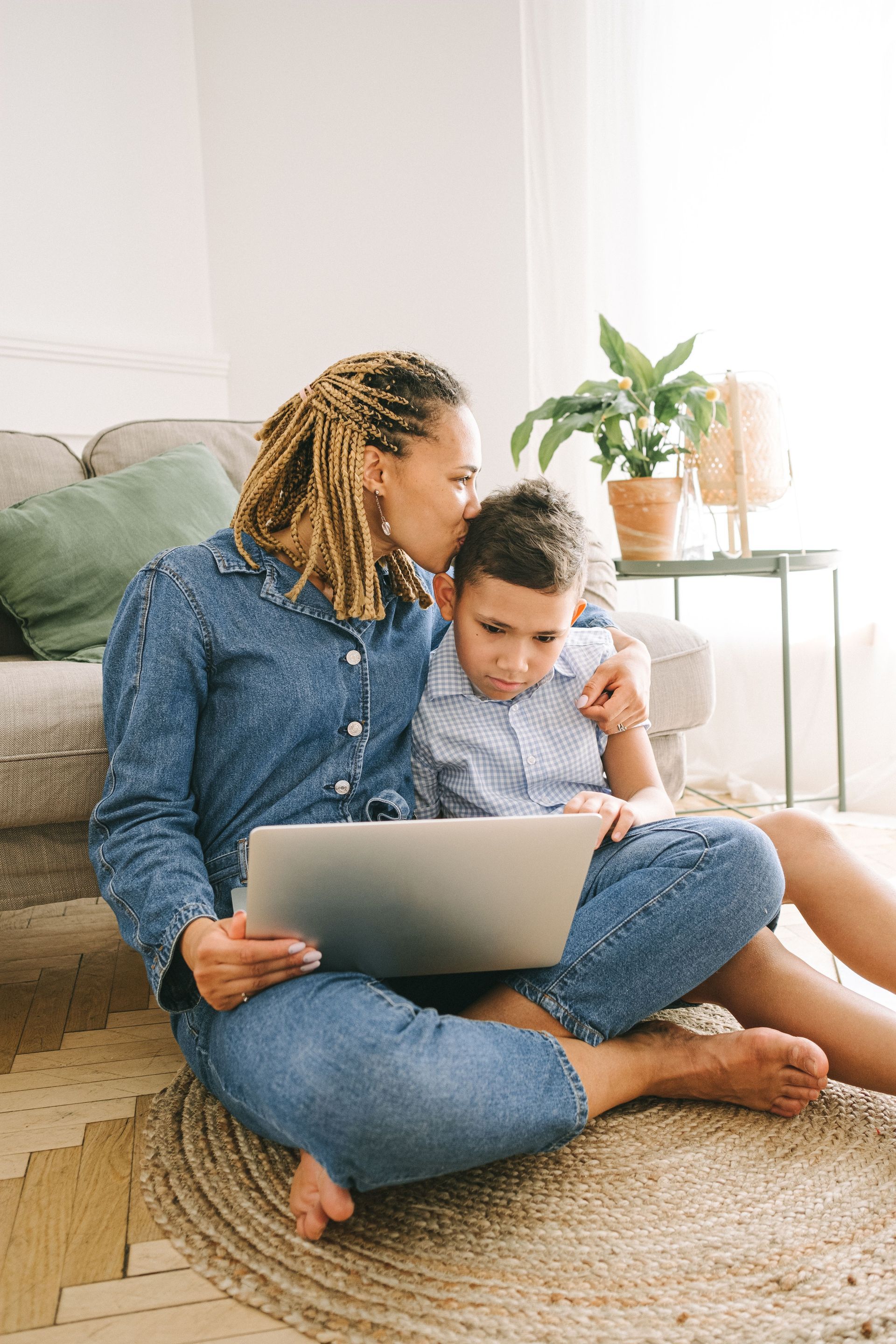
When the feeling rises, our job is not to make it go away. It's to hold space. We let them feel it. We don't rush it, we don't shush it, and we don't fix it. We let them know, with our whole presence, our validation, and our empathy, that we love them. But none of that is to make the feeling go away. It's simply to show love while they navigate hard emotions. Holding space doesn't mean anything goes. While the feeling runs its course, we hold a few simple boundaries, firmly and as gently as we can. They don't get to hurt others, they don't get to hurt themselves, and they don't get to destroy things. Everything else, they're free to feel and express. And little by little, held inside that steady boundary, they learn they can feel even the biggest feeling all the way through and come out whole.
This is its own enormous topic, far bigger than one section of a post about losing, and we go much deeper on it in other writing. Raising kids who know how to feel is, in a lot of ways, the whole job. It isn't the point of this post. But it's always worth naming, and always worth the reminder, because it sits underneath everything else here. The losing, the winning, the loose rules, all of it only works because there's a regulated parent nearby who can allow a child to feel.
This is your work too
Here's the part nobody loves hearing, so I'll just say it plainly. If your child doesn't know how to lose, there's a good chance you don't either. That's not a knock on you. It's an invitation. The very thing you're trying to teach your kid is so often the thing you never got to learn yourself.
It's wonderful when this gets practiced at three and four. But if it didn't, no window closed on you. We do the work now, whether we're three, nine, sixteen, or forty three. When a piece of our growing up got skipped, that part doesn't just disappear, it waits, and the way through is to go back and grow up right in the spot where we got stuck. So while you're on the floor losing the board game on purpose and saying the kind words, notice what stirs in you. The tightness when you lose. The little sting when you fail in front of people. That's the work pointing back at you. And here's the gift in it. You don't have to carve out separate time for your own healing. You get to do your work and your child's work in the very same moment, on the same living room floor, while some quieter, younger part of you watches and learns it too.
Keep doing the work
If your child is older and still wrestling with all of this, don't worry that you fell behind. Just keep going. Find chances to lose where they can see you, keep modeling what it looks and sounds like, and keep rooting for them instead of turning everything into a competition. Little by little, it takes root. This is a practice, not a milestone you check off once.
Because the real win was never the game. The real win is a person, three or forty three, who can lose and look you in the eye and still feel like enough, who knows all the way down that nothing they do on a field or a board or a finish line could ever change how loved they are. So take the moments where you get to be the one going down in flames, and lose out loud, with your whole heart. Show them that even the loser is whole, and valuable, and lovable, and completely awesome.
Reflection Questions
- When was the last time your child watched you lose at something and stay completely okay? What did that ask of you in the moment, and what do you think they took from it?
- Think back to your own childhood. Who, if anyone, showed you that losing was safe? And where do you still feel the absence of that today, in the way you handle coming up short?
- When your child is swallowed by a big feeling, what's your honest first instinct, to sit in it with them, or to make it stop? Where do you think that instinct first came from?
- What's the voice in your head when you fail in front of people? Is it the voice you'd want your child to inherit, since the one they hear is the one they'll learn?