ATTUNED, NOT JUST AWARE
The quiet difference between watching our kids and tuning in to them.

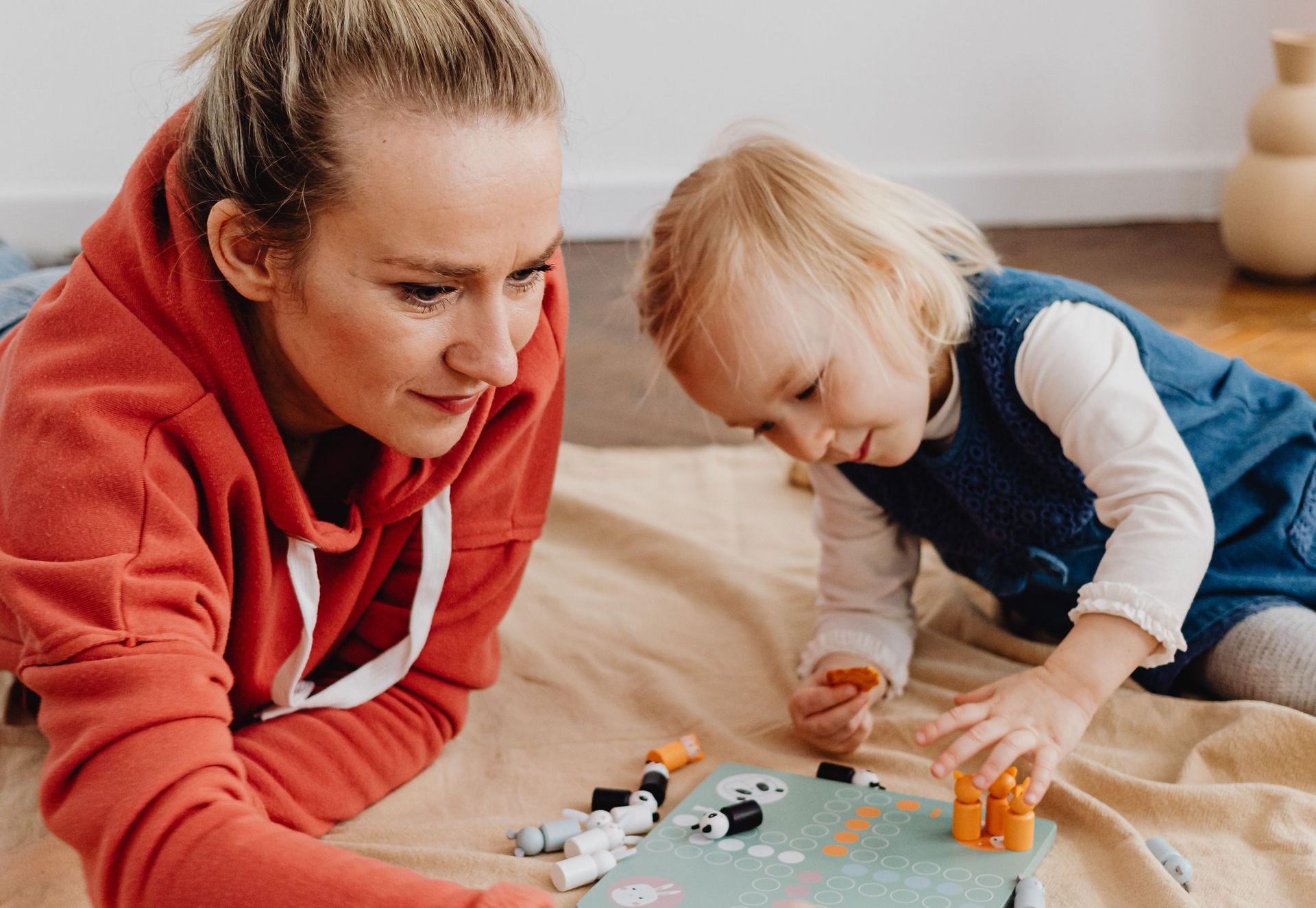
Here's a question worth sitting with for a second. When you're watching your kid, are you attuned to them, or are you just aware of them?
At first those sound like the same thing, and honestly aware sounds like the better word, the more responsible one. We're supposed to be aware parents, paying attention, on top of things, not missing a beat. But there's a real difference between the two, and once you feel it, you can't unfeel it. It changes how a hard moment goes.
Both attunement and awareness start in the same place. They start with noticing. You clock that your kid is loud, or moving slow, or melting down in aisle seven, or picking a fight with their brother for the third time before breakfast. Same noticing. What changes everything is what's riding along with it.
Awareness is noticing that's already decided
Awareness, the way I'm using it here, is noticing that's already half made up its mind. You see the behavior, you slap a label on it, and you move straight to fixing it. He's being difficult. She's being dramatic. They're doing this on purpose. The noticing shows up pre-loaded with a verdict, and the verdict is almost always that something's wrong with the kid.
And let's be fair to ourselves here, because this comes from a good place. When we're aware like this, we feel like good parents, and in plenty of ways we are. We're involved. We're paying attention. We haven't checked out and left our kid to raise themselves. The surveilling, the monitoring, the tracking, the managing, the correcting, all of it grows out of love and a truth we know in our bones, that kids don't just quietly grow out of things on their own, that they need us, that guiding them is the whole job. That instinct is right. Nobody should apologize for caring enough to stay this close.
Here's the turn, though. That same awareness can carry two very different things underneath it. It can carry love, or it can carry fear, and the attention looks almost identical from the outside either way. The way you tell them apart is by what it feels like to be inside it. When your responses keep coming out critical and harsh and reactive, fueled by whatever you were already carrying that day, and when there's no joy in the parenting, no peace, no sense of wholeness in it, that's the tell. That's awareness that's quietly tipped over from love into fear and judgment, usually without you ever deciding it should.
From there it's a short walk. Corrections and criticism. The clipped, annoyed voice. The limit that comes out as a snap instead of a sentence. The raised voice. And on the rough days, the ones we don't love talking about, the grab, the yank, the words that land as shame and stick around a lot longer than the moment that caused them.
Awareness in this mode is basically surveillance. You're scanning your kid for what's wrong so you can stamp it out. And here's the part that stings, it usually doesn't even work. A kid who feels watched for their failures doesn't settle, they brace. You get more of the behavior, not less, and now you've spent your patience and gotten nothing back for it.
Attunement is noticing that stays open
Attunement is noticing that stays curious. Same loud kid, same aisle seven, but instead of a verdict you've got a question. What is this telling me?
Picture tuning an old radio, the kind with a dial. Your kid is always broadcasting. Always. The behavior you see is the broadcast, but the behavior isn't the message, it's the signal carrying the message. Your job, when you're attuned, is to slowly turn the dial and adjust the antenna until the static clears and you actually pick up what's coming through.
And what's coming through is almost always a need. Overstimulated. Understimulated. Hungry. Tired. A day with no shape to it, nothing to lean into. Craving a little joy. Needing rest. Needing connection with you specifically. Needing a break from a sibling they've been pressed up against since 6 a.m. Behavior is the noise. The need is the signal underneath it. We are so much more likely to actually meet a need when we're tuned in and working to support, instead of standing back and judging the noise.
None of this means the static isn't real. Some days the signal is faint and you're worn out and the dial just won't catch, and that's part of it too. Attunement isn't a magic trick that makes parenting easy. It's a posture. It's where you point the antenna.
The same moment, two different antennas
This gets clearer with examples. Here are a few ordinary moments run through both postures. Notice that the attuned column never has just one right answer. There are usually a couple of ways it could go, depending on what you're actually picking up from your kid in that moment. That's the whole point. Attunement isn't a script, it's a read.
The store meltdown. Bright lights, noise, an hour past when you should've left.
Aware: "Stop it. We're almost done. Why do you always do this?"
Attuned: maybe you read it as overstimulated. "This store is a lot, huh. Two more things and we're out of here." Or maybe it's a kid who's hit empty and just needs you on their team. "Almost done, bud. Hold my hand, we'll get through the last bit together."
The pre-dinner unraveling. Everything is suddenly the end of the world at 5:15.
Aware: "Go to your room until you can be nice to people."
Attuned: maybe it's a tank running on fumes. "Here, eat this while I finish, dinner's two minutes out." Or maybe the hunger is real but underneath it is a kid who held it together all day and finally needs to come apart near someone safe. "Rough afternoon, huh. Come sit up here and keep me company while I cook."
The sibling friction. Third fight before breakfast.
Aware: "Why can't you two just get along for five minutes?"
Attuned: maybe they've been on top of each other too long and need space. "You two have been stuck together all morning. Let's split up for a bit." Or maybe the fighting is a bid for you, two kids reaching for the same parent. "Come here, both of you. I think you need a little of me before you can be around each other again."
Bedtime resistance. Stalling, one more drink, one more question, suddenly very chatty.
Aware: "Go to bed. I am not doing this tonight."
Attuned: maybe their body is still wired and can't come down on its own. "You're still all revved up, huh. Let's do a few slow breaths together and turn the lights down low." Or maybe the stalling is a reach for connection after a day where you were both running in different directions. "I feel like I barely saw you today. Come here for a real hug, then we tuck in."
Here's the freeing part. There's no single correct line waiting to be discovered. There's only the response that's most supportive for this kid in this moment, and you find it by tuning in, not by memorizing the right thing to say. Which also means you're going to misread it sometimes, and that's okay. You'll set a firm boundary and realize halfway through that what they actually needed was to feel connected to you, to feel heard and seen. Or you'll get playful when what would've helped most was a clear, steady boundary so they knew exactly where the line was. That's not failing. That's just the dial moving. You feel it land wrong, you adjust, you try the next thing. And your kid gets something better than a parent who's always right, they get a parent who keeps tuning in until they find the signal.
Attuned doesn't mean soft
Here's where people get tripped up, so let me be clear. Attunement is not the absence of limits. Look back at those examples. "Two more things and we're out." "Two minutes, then lights out." Those are firm boundaries. They didn't get softer.
What changed is they're not soaked in heat. Attuned boundary setting is firm and unbothered at the same time, which is a combination a lot of us didn't grow up seeing. You can hold the line without your voice climbing, without the sigh, without making your kid feel like a problem for needing the line in the first place. The limit stays, the shame doesn't come with it.
The most underrated move in the whole thing
There's one phrase pattern that does an enormous amount of quiet work, and it's worth practicing until it's automatic. It sounds like this:
"I don't expect you to know this yet."
"I should've reminded you before we walked in."
"That one's on me, I forgot to give you a heads up."
What these do is pull the expectation off the kid. So much of the shame in everyday correction comes from this hidden assumption that the kid should have already known, should have remembered, should have read our mind about the rule we never actually said out loud. When you take that expectation back, you can still set the limit, the limit doesn't go anywhere, but you set it without making your kid feel dumb or bad for not having it figured out yet.
Picture walking into a friend's house. Your kid bolts straight for the couch, shoes and all, and starts bouncing on the cushions before you're even through the door. Aware: "Hey! Get down right now. What is the matter with you, we don't jump on other people's furniture." Attuned: "Whoa, hold on, that one's on me, I should've told you before we walked in. At someone else's house we keep our feet off the couch. Come here, let's find you something else to do." Same limit. Same couch. Completely different thing happening inside your kid.
This is calm awareness building, and it's the good kind of aware. You're still helping them learn the thing. You're just doing it without the verdict attached.
So which one are we choosing
Your kid is broadcasting all day long. They can't really do anything else. The only question that's actually up to us is what we do with the noticing once it lands.
Aware, and we're scanning for what's wrong so we can correct it, and we tend to find exactly what we went looking for.
Attuned, and we're listening for what's needed, turning the dial, clearing the static, trying to catch the signal under the noise. Same kid. Same hard moment. Same aisle seven. Different antenna, and a completely different day.
Tune in.
Reflection Questions
- When you catch yourself correcting your kid, take an honest look. Are you tuned in to what they need right then, or are you mostly watching for what's going wrong?
- What's one behavior you've been reading as your kid giving you a hard time, that might really be your kid having a hard time? If you turned the dial past the noise, what could be sitting underneath it?
- When your kid is coming apart, where do you reach first, a firm boundary, a little playfulness, backing off to reconnect? Is that an actual read of what they need, or just your default move?
- Where do you catch yourself expecting your kid to already know something you never really taught them, and what would it look like to hold the limit without the shame, to take that one off their shoulders?