LET THEM GRIEVE
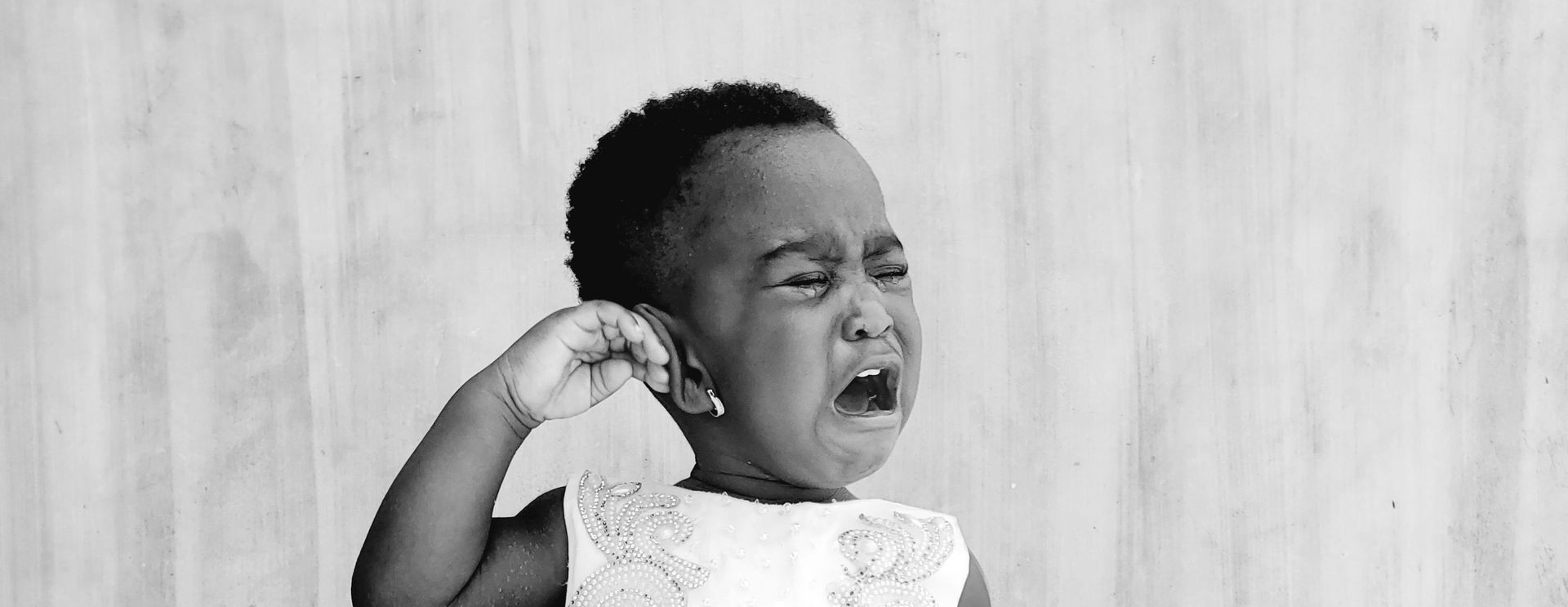
It's not just a meltdown, it's grief.
Kids grieve all day long. We just don't always call it grief, because we save that word for death, for funerals, for the losses everyone agrees are allowed to hurt. But grief is so much bigger than that. Grief is what the heart does with loss, any loss. It's the ache of what they had and lost. It's the ache of what they never had and wanted so badly. It's the ache of what they can't have, no matter how hard they wish for it. It's the future they pictured that isn't coming. It's the way things used to be. It's the safe thing that turned out not to be safe. It's the self they thought they were going to get to be. Whenever something is taken, or never arrives, or turns out to be impossible, grief is the name for what's left behind.
And here's the part that changed how I parent. Underneath so many of the big feelings, the anger, the meltdown, the slammed door, the tears that won't quit, there is so often a grief. The anger is just the surface. The loss is what's underneath. So when my kid is coming apart, my first question isn't "how do I make this stop." It's "how can I hold space for this?" Because the grief underneath was never asking to be fixed. It was asking to be felt.
It was never about the size of the thing, either. It's about the size of the love, or the want, or the hope that just got taken away, and to a child that can be the entire world. If we wait around for a loss big enough to earn the word, we walk right past a hundred chances to show our kids their hearts are safe with us. So let me take you through it, smallest to largest, all the grief one childhood can hold.
The ice cream scoop that slid off the cone and hit the sidewalk.
The block tower that took all afternoon, flat in a second.
The balloon that slipped off their wrist and floated away.
The crayon that snapped in half.
The favorite stuffed animal nobody can find.
The goldfish that was swimming yesterday and isn't this morning.
The painful declaration on the playground "You're not my best friend anymore."
The birthday party everybody else got invited to. The seat nobody saved for them.
The part in the play that went to some other kid.
The test they studied for and failed anyway.
The best friend whose family is moving away.
The team they tried out for and didn't make.
The e-bike that wasn't under the tree on Christmas morning.
The For Sale sign in their own front yard.
Mom and Dad sitting them down to say they're splitting up.
The dog who's been here since before the kids were born.
The first love, and the first heartbreak.
Grandma passes away.
That list runs from a scoop of ice cream on the sidewalk all the way up to losing a grandparent. Those are nowhere near the same size, but they ask the same thing of us. They ask us to let our children grieve.
And most grief, for a child, is not the big stuff at all. It's small, and it comes all day long, wave after wave after wave. The banana broke in half. The blue cup is in the dishwasher, so they're stuck with the red one. They wanted to press the elevator button and their sister got there first. The toast got cut into squares when they wanted triangles. The show is over. It's time to leave the park. The tower they spent all afternoon on fell in a second. It started raining and the trip got cancelled. Their friend picked someone else to sit with. They came in second. Their brother's slice of cake looked bigger.
To us, none of it registers. We've lived long enough to know a red cup holds water just fine. But to a child, every one of those is a real loss, a small wave of grief that rises up and needs somewhere to go. They aren't being dramatic, and they aren't trying to work us. They're grieving, in the only sizes a child has, dozens of times a day.
So What Does It Look Like?
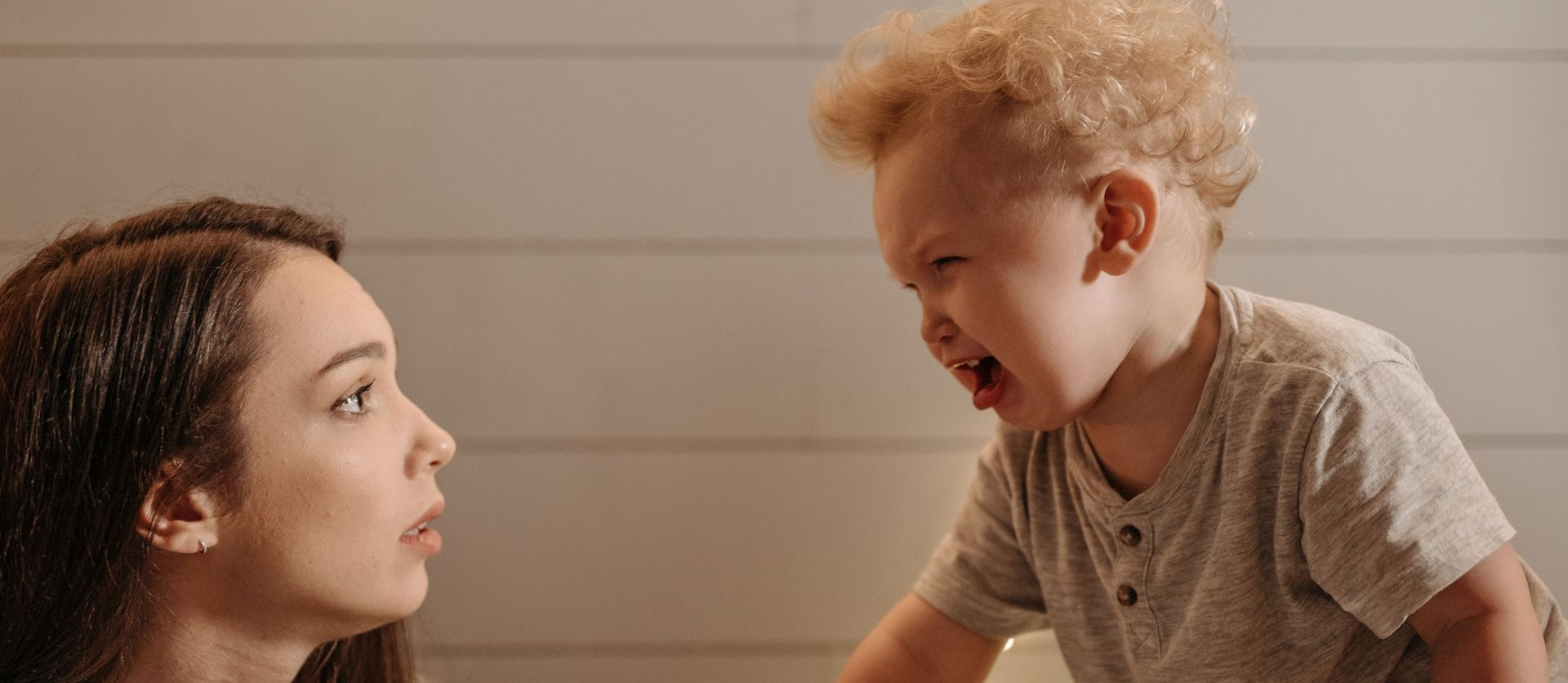
So what does it actually look like to let one of these waves move through? It's simpler than fixing, and mostly it's just staying. The banana breaks. Instead of "it's fine, it tastes the same," you crouch down to his level. "Oh, you really wanted it whole. That's so disappointing." You don't hand him a new one. You don't explain that a broken banana is still a perfectly good banana. You just let him be sad about it, and you open your arms in case he wants them. The banana stays broken. He gets to grieve it.
Or the show ends and she crumples. Instead of "okay, that's enough now," you say, "I know. You were so into that one. It's hard when something good is over." You sit with her in it. Maybe you rub her back. You don't turn it back on, and you don't talk her out of the sadness. You just let her feel the ending. And then it passes, and she slides off your lap and wanders off to find the next thing.
The Small Stuff Is the Practice
And here's why it matters so much. Grief that gets felt gets to leave. Grief that doesn't, doesn't. It doesn't evaporate because we talked them out of it or rushed them past it. It goes underground, and it comes back out sideways. It comes out as the meltdown an hour later over nothing at all. The shove to a little brother. The sudden meanness. The refusal to put their shoes on. The stomachache before school. The wall that goes up and won't come down. The grief we wouldn't let them feel doesn't disappear. It just waits, and it finds a harder door to come out of.
Which is exactly why the small stuff is where it's learned. Every little wave a child is allowed to feel all the way through is a rep, practice for the losses that won't be small. A kid who learns that a broken banana is survivable, that the feeling rises and crests and passes and they're still standing, is a kid quietly building the muscle for the heartbreaks and the goodbyes. We don't get good at grief by skipping the small stuff. We get good at it by letting them have it, again and again, while the stakes are low and we're right there beside them.
And the feeling itself is the whole point of the practice. Grief is uncomfortable. It's supposed to be. That ache, that lump in the throat, that heavy unwanted thing, is exactly what they're learning to stay inside of instead of running from. A child who gets to feel a small grief all the way through is learning something in their body that no lecture could ever teach them, that an uncomfortable feeling can be felt and survived, that they don't have to flee it or stuff it down or pretend it isn't there. That's the muscle we're after. Not toughness, not getting over it quickly, just the plain ability to feel something hard and stay standing while it moves through.
Because the losses keep coming long after childhood, and they get bigger, not smaller. A kid who never got to practice feeling the small ones still has to do something with all of it, and what they reach for is usually some kind of escape hatch. They learn to look away from it, to numb it, to push it down and call it handled, to stay so busy they can't feel it anymore. None of those make the grief leave. They just teach a child to abandon a piece of themselves to get away from a feeling. When we let our kids grieve the small stuff, we're handing them a different option for the rest of their lives, the option to turn toward a hard feeling instead of away from it.
The Tools We Reach For
And that's harder than it sounds, because letting them grieve means not reaching for all the tools we use to make the feeling stop. I haven't reached for every item on this list, and neither have you. But I'd guess we've all reached for some of them, usually without ever meaning to. That's the only reason I'm laying it all out, so we can start to recognize the quiet, well-meaning ways we try to stop our children's grief. Here it is.
Minimize it: "It's not a big deal." "You're fine." "It's not the end of the world." "It's just a goldfish." "That's nothing to cry about." "Big kids don't cry over this."
Distract from it: "Let's go get a new one." "Want to watch your show?" "Ooh, look over there." "Here, have a snack." "Let's go do something fun."
Fix it: "We'll get you another one." "I'll talk to your teacher." "Here, take mine." "Let me handle it."
Silver-line it: "At least you still have..." "Look on the bright side." "Everything happens for a reason." "Now you get to..." "Think of it this way."
Rush it: "You'll feel better soon." "Tomorrow's a new day." "Time heals everything." "You'll forget all about this." "Shake it off."
Compare it away: "Other kids have it way worse." "Some kids don't even have a home." "When I was your age..." "Your brother didn't cry."
Toughen it out: "You're tough, you can handle it." "Be a big boy." "Toughen up." "Brush it off."
Bargain it down: "If you stop crying, we can get ice cream." "Do you want a treat?"
Spiritually bypass it: "God has a plan." "It'll all make sense one day." "Everything works out how it's supposed to."
And the quiet ones, the shush: "Stop crying." "Calm down." "There's no reason to cry." "You're okay, you're okay." "Enough now." "Shhh."
We can't stand to watch our kids hurt, so we grab for whatever makes the hurt stop the fastest. But the child doesn't hear "I love you." The child hears "this feeling isn't welcome here," and slowly learns to carry the grief somewhere else, somewhere alone.
So whatever the loss, big or small, our job isn't to fix it or explain it away. The only way out is through. Our job is to stay right there beside them while they feel it, the little stuff and the big stuff, and to not rush them past a single piece of it.
Let them grieve... all the way through.
Reflection Questions
- When your child comes apart over something that looks small to you, which item on the menu do you reach for first, and what is it in you that it's trying to quiet?
- Think of a grief your child is carrying right now. Underneath the anger or the tears, what did they actually lose, the love, the want, or the hope?
- Where in your own childhood were you handed a "don't worry" instead of being allowed to grieve, and how does that shape what you offer your kids now?
- When you picture your child grown, meeting a real loss, what do you hope they'll be able to do with the feeling, and where will they have first practiced it?