ROUGHHOUSING FOR THE WIN
The Rules and Benefits of Roughhousing
Roughhousing for the Win
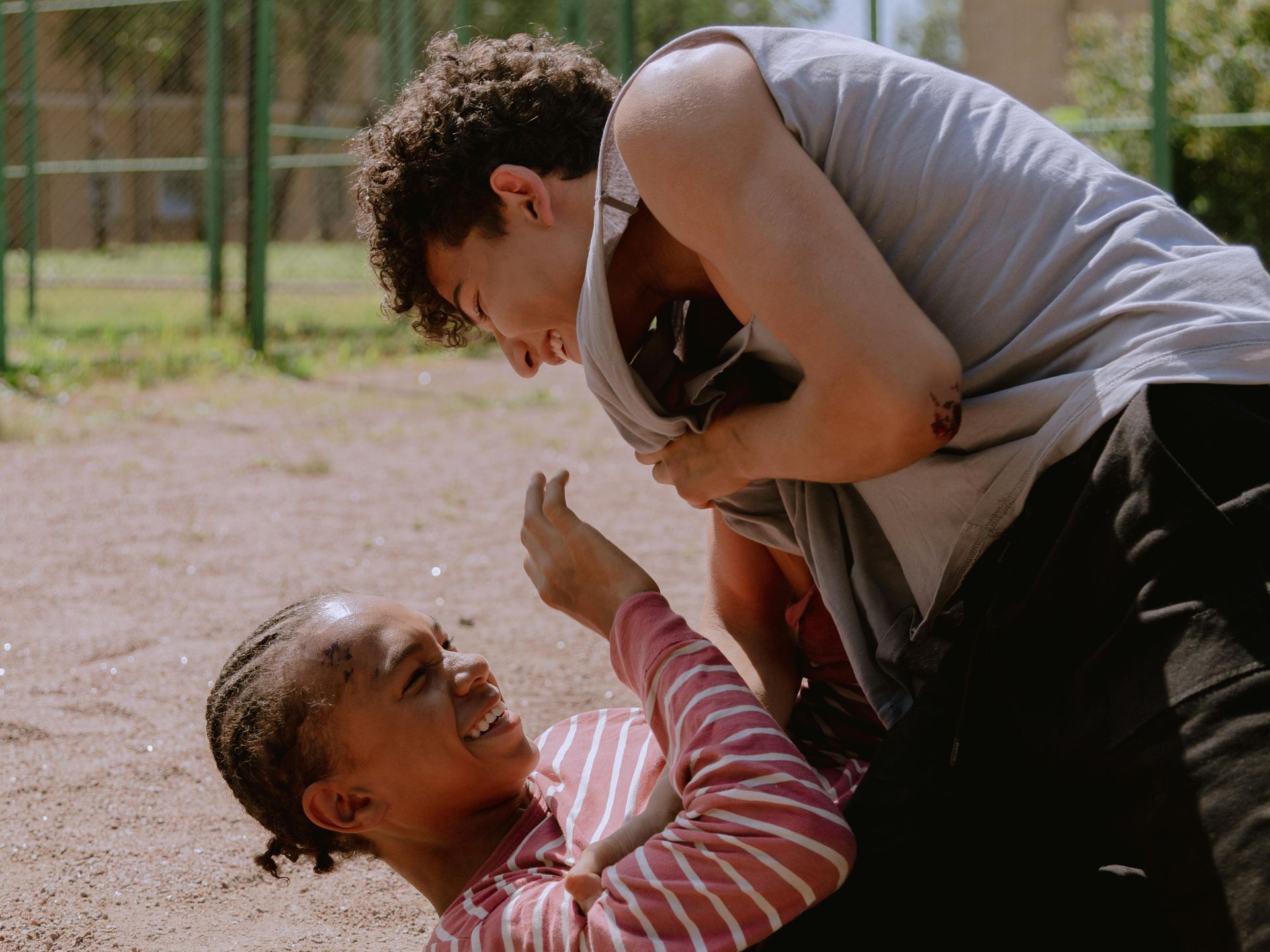
Play fighting can be one of the most joyful, connecting things kids do together. It can also go sideways fast. Here's how to keep it safe, fun, and empowering for everyone involved.
Roughhousing is not the problem. Kids need physical play. They need to test their bodies, feel their strength, learn to read other people, and practice saying stop and having it mean something. When it's done with clear rules, roughhousing builds all of that.
Roughhousing can happen between a parent and child, between siblings, or between friends. Sometimes the parent is in it, sometimes they're watching from nearby. Either way, the rules are the same and the parent's role stays consistent.
The rules below are what we use in our family. They're firm, simple, and the same every time. That consistency is the point.
The Benefits of Roughhousing
In this post I'm going to go into depth on a lot of subjects around roughhousing, but I'm only skimming the surface when it comes to the benefits. Here is a snapshot.
An outlet for healthy aggression. Kids have energy, intensity, and a natural drive toward physical expression. Roughhousing gives that drive somewhere to go. Research shows that kids who engage in regular rough and tumble play actually show less aggression over time, not more. They get to push, resist, and feel their own strength in a safe container, and that makes the pressure valve unnecessary everywhere else.
Body intelligence. Physical play builds what researchers call body awareness, the ability to understand where your body is in space, how much force you're using, and what your body is telling you. Kids who roughhouse regularly develop better coordination, balance, and physical confidence. They learn their own strength and how to calibrate it.
Brain development. Intense physical play stimulates the growth of brain-derived neurotrophic factor (BDNF), sometimes called "Miracle-Gro for the brain." It supports neuron growth in the areas responsible for memory, language, and logic. Kids who roughhouse at home tend to do better in school and have stronger friendships. The brain and the body are not separate systems.
Emotional intelligence. Roughhousing is a live classroom for reading people. Kids learn to notice when a mood shifts, when laughter turns to frustration, when someone needs a break. They practice managing their own excitement and impulses while staying attuned to someone else. These are the same skills they will use for the rest of their lives in relationships, at work, and in community.
Self-regulation. The physical intensity of roughhousing asks kids to rev up and then come back down, to hold back when needed, to stay in the game without going over the edge. Research from 2017 identified rough and tumble play as one of the most effective natural training grounds for self-regulation in children.
Social skills and reading nonverbal cues. A big part of roughhousing is nonverbal. Kids learn to read body language, facial expressions, and energy shifts in real time. They learn to distinguish between play and real distress, between a laugh and a signal that something has changed. This kind of social attunement is hard to teach in a classroom and almost impossible to learn from a screen.
Bonding. Physical play between a parent and child releases endorphins in both of them. When the wrestling is over, the body often releases oxytocin, the same chemical involved in closeness and trust. Roughhousing is one of the fastest ways to reconnect after a hard day, a fight, or a long stretch of distance. You don't need words. You just need to get on the floor.
Self-defense. Especially if your child is doing jiu jitsu or wrestling alongside their roughhousing at home, they are building a real, embodied skill set for protecting themselves. They learn how to fall safely, how to get out of holds, how to stay calm when someone has physical control over them. This is not a small thing, especially for children who are smaller or younger than the people around them.
Resilience and a relationship with discomfort. Roughhousing teaches kids that they can get bumped, knocked around, startled, and caught off guard, and still be okay. They learn to tolerate physical discomfort without falling apart. That tolerance transfers. A child who knows how to take a fall and get back up is also building the capacity to handle disappointment, failure, and the harder moments of growing up.
Joy. Research on play has found that when the play circuits of the brain are activated, especially through roughhousing, the result is pure joy. Not just fun. Joy. It is one of the few experiences that is good for everyone involved, at every age, every single time.
The Parent's Role
Whether you are in the middle of the pile or watching from the couch, these are your jobs.
Hold your own boundaries first
You get to have boundaries too. I don't enjoy being hurt, tickled, or licked, and I communicate that clearly. At this point my sons know my personal boundaries well and it often goes unsaid.
As the adult, I hold a lot of power in these moments and I take that seriously. When my boundary is crossed, I don't get upset, scold, shame, or punish. I stay calm and matter of fact, because part of what I am teaching is that my boundary is real and it doesn't move just because someone pushes on it. I may give one reminder if I think it will land, but if the boundary is crossed again, I stop playing. Not as a punishment, but as a natural consequence. "I know you can play with me without licking me. I'm done playing for now, but we can try again tonight after dinner." No drama, no yelling, no shame.
And here is the thing about held boundaries: they actually free everyone up. When kids know where the line is and trust that it won't move, they stop testing it and start playing freely inside of it. That's what modeling your own boundaries looks like, and it is one of the most useful things your child will ever watch you do.
Help each child hold their own boundaries
Kids holding physical and verbal boundaries against other kids can get complicated. When a child's voice isn't honored, they lose trust in words as a tool, and they may turn to physicality to take back control. That's a pattern worth interrupting early.
When you see a child not honoring the boundary of another child, step in. Don't wait for it to escalate. Their voice should be enough to keep them safe, and when it isn't being honored, that's your cue. We don't leave kids to figure it out. When consent is withdrawn, play stops immediately. That's not negotiable, and it's not situational.
When the rules of roughhousing are taught and boundaries are held, it becomes part of the culture. It's just how things work. You will watch kids back off when their words go too far, or stop right away when they hear ouch. When kids know the rules it sets everyone up for success, less conflict, and a lot more fun.
Help kids who haven't found their voice yet
Some kids are not inclined to use their voice in the middle of physical play. It's not that they can't, it's that they haven't practiced. You can see it in their body language, their expression, or a shift in their energy. Get curious. Pause the play and check in. If you sense they need a break, getting emotional, moving toward aggression, shutting down, or overwhelmed, call it and give them the words and the power.
If I see a child overwhelmed I might say, "Let's stop for a second. Don't forget, you can say stop any time you want."
Then practice it. As a jiu jitsu coach, my fiercest little athletes often have the meekest voices. Here's how I work on it with them:
I have them on top of me and I say "STOP" loud and clear. They stop. I show them what it looks like when a stop is honored.
We switch. "Let's spar, and at some point I want you to say stop." When they do, I stop immediately.
We repeat a few times, working on making the stop louder and firmer each round.
Then I wait for them to use it on their own, and when they do, I praise the heck out of it.
The goal is for their voice to feel powerful before they need it.
The Rules for Roughhousing
1. An adult is present
An adult is present, whether that means joining in or watching close enough to step in.
2. No punching, no kicking, no hurting each other
No punching, kicking, slamming, biting, pinching, pulling hair and so on. Wrestling is the model here. It's physical, it's real, and it gives everyone time to tap out. Striking is a different skill for a different context.
3. "Stop" means stop
Any words indicating stop, such as "stop," "let me go," "get off," or "I'm done," mean stop. No negotiating, no finishing a move. Stop right away.
4. "Ouch" means stop
Any "ouch", small, meek, loud, unserious, unwarranted, all mean the same thing: stop. We don't judge it, debate it, or decide if it counted. The same goes for body language: holding a body part, a pained expression, a mood shift, aggression creeping in, a sound of discomfort that indicate "ouch." When something shifts, we stop and check in.
5. Verbal roughhousing
No intentional insults, ever. And even respectful trash talk like "I'm going to beat you" or "I'm going to get you" can feel unwelcome to some kids. The same rules apply. If the words don't feel good, a simple "stop, that's not fun for me" is enough, and it gets honored.
6. Tickling never goes past consent
Tickling feels playful, but it removes control from the person being tickled. They may laugh while genuinely wanting it to stop. All the same rules apply: stop means stop, ouch means stop, a mood shift means stop. Tickling past consent is not a game. Ask first, and watch for the answer in both words and body language.
7. Parents can stop it at any time
If something sounds unsafe, dysregulated, or not enjoyable for everyone, the adult calls it. No debate. We try again another time when everyone is ready.
More about "Ouch": Let Them Build Their Own Relationship with Their Pain
A child who says (or yells) "ouch" doesn't need to be pushed through it. They need time to process the signal between their body and their brain. That relationship is theirs, not ours. Our job is to leave space for learning to occur.
What gets in the way:
"You're fine." Try instead: "Ooo, looks like that hurt. Take your time."
"Shake it off." Try instead: "Take a second."
"That didn't hurt, lets go." Try instead: "Take your time. What do you need?"
Their evaluation of their own pain is not ours to question. The better their relationship with physical pain, the more resilient they become. They will learn when they are hurt versus when they are injured, when they can keep going and when they need to stop. But first they have to feel it, process it, and learn from it.
Pain, like emotion, moves in waves. It rises and then it comes back down. Kids can learn this. They can learn that a hard landing is different from a sprained ankle, that a deep muscle press is different from a poked eye. But that learning takes time and it takes space. Let them ask themselves: what happened, how did it feel, am I okay? Then wait for the answer.
Even if your evaluation differs, believe them. If it feels "terrible", let it be terrible. When a child doesn't have to convince you that it hurts, they don't need to perform the pain. Over time their reaction will better match what actually happened, but only if we stop being one of the obstacles. Guide them toward appropriate care: "Let's see in five minutes if it still throbs." "Let's get some ice and check in tonight." That's the job.
Your role is to check in and wait. "Ooo, looks like that hurt. Take your time." Then wait. If you sense an injury, trust your gut and get them checked. Trust your gut. If you watched the fall and something feels off, get them checked. Concussions, back injuries, broken bones, those warrant attention. But believing your child doesn't mean ordering an x-ray for every bump. It means you don't challenge their experience. You lead with care, and you let them be the expert on their own body.
A note on "ouch kids"
Some kids will say ouch twenty times in a minute, every time you make contact and there is the slightest bit of discomfort. As a jiu jitsu coach I see this in kids of all ages including teenagers. Regardless of age or size, every time they say ouch, the round stops and they can restart, again and again. Eventually they become aware of their own ouch. They start to notice when they actually need a stop versus when the word is just a reflex. The consistency is what gets them there. If we start picking which ouches count, we've already lost the thread.
Good Sportsmanship, Trash Talk, and Learning to Win and Lose
Playful banter is a skill kids can learn. But it comes after they've learned to recognize when banter stops being fun for the other person and to stop. Teasing, belittling, and gloating that aren't enjoyed by both sides means a boundary is being crossed and the trash talk needs to stop.
When a child can't separate their worth from the outcome, it shows up on both ends. When they win, they gloat and rub it in because they need the victory to feel superior. When they lose, they sulk, withdraw, get aggressive, or fall apart, because the loss doesn't just feel like a loss in a game. It feels like a statement about who they are.
As a parent you can translate for them. Correction comes in the form of modeling.
When they win and gloat, "I win, I'm the best. You lose. Ha ha!",
you can say: "It feels good to be the winner? Yeah, winning does feel good."
When they lose and fall apart (they fold their arms, sulk, growl, swat at you),
you can say: "Ugh, you were hoping to win that one. Losing is hard to feel. Take your time."
Then keep everyone safe while they process the emotion.
Ages 3 and 4
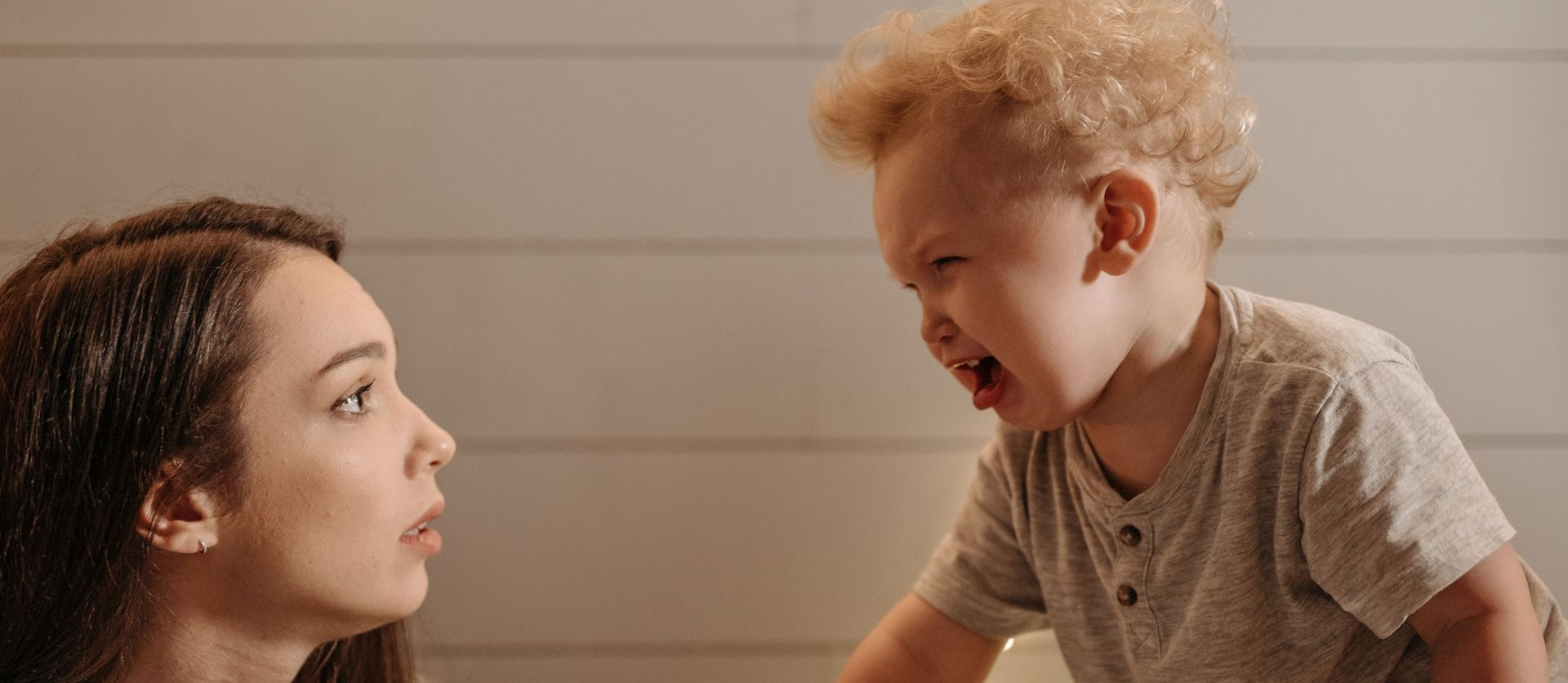
At this age, collaborative games or games where they win and the adult models losing are most beneficial. When they do join a game with a winner and loser, understand they are not quite there yet where they can separate their worth from the outcome. Be prepared to hold space while they navigate discomfort. They may cry, sulk, scream, meltdown, run, or hit. They are learning to feel a feeling. Hold space while they process it all the way through. This is not a reflection of their goodness.
They are a little young for real competition. We are better off letting them win in these years and modeling for them what losing looks like. Eventually they will mimic us and see that it is safe to lose.
Young children will invent games with winners and losers to process how it works. One of my sons used to assign a winner and loser to pool races and tell us exactly how we were going to react afterward. Another set up race car games where it was pure chance, whichever car landed on its wheels won. He had many opportunities to lose, and I had many opportunities to win or lose right alongside him. You could see in his body language that it was a real struggle when his car didn't win. But I also got to model something else: cheering for him, rooting for his car, being genuinely happy when he won rather than teasing or making it competitive. Before long I watched him cheer for me. My win became his win.
If your child is not a good winner or not a good loser, model how to do it. If your instinct is to tease or playfully trash talk, hold off until your child can lose and stay regulated, until they can separate losing from their self worth. If your child falls apart when they lose or brags when they win, it is a good sign that their self esteem is still tied to external validation. The work is to model losing, and to show them that when we lose we are still the same awesome person.
In case you were wondering, losing sounds a lot like winning.
Losing sounds like: "Nice job. That was so fun! You did great. Can't wait to play again."
Winning sounds like: "Nice job. That was so fun! You did great. Can't wait to play again."
You will notice your child begin to say similar things when they lose.
After Age 5
In general, kids do much better with competition after age 5. They can stay more regulated and the outcome doesn't pierce as deeply into their identity. That said, it is still a practice they will work on for years. If your child is over 5 and still struggling, keep doing the work. Make it a priority to find opportunities to lose in front of them and model what it looks and sounds like. Model rooting for them rather than teasing or making things competitive. Little by little they will gain the skills.
The Two Big Takeaways
When we teach kids the rules of roughhousing, we are giving them two things that will follow them for the rest of their lives.
Takeaway One: Their voice is enough to keep them safe.
When we roughhouse with clear rules, we are teaching our kids what it feels like to have their voice honored. To say stop and have it mean something. To check in with their body and trust what they find.
That familiarity matters more than we realize. Because when our child is in an environment where their voice is not enough to keep them safe, we want them to feel it immediately as the red flag it is.
What should feel wrong to them:
A friend who keeps teasing after being told to stop.
An adult who hugs them after they declined.
Someone who tickles them past stop.
Anyone who decides their "no" doesn't count.
This should not register as normal. What should feel familiar to your child is an environment where their voice keeps them safe and comfortable. Any other environment should have them running toward a trusted adult, not learning to tolerate it.
And when they grow up, that same instinct protects them. It is the difference between ending a first date that feels off and spending years inside a relationship that never honored them to begin with.
Teach your child what love looks like. Honor their voice. Because this is what they will carry with them into every friendship, every relationship, every room they walk into for the rest of their lives.
Takeaway Two: It's bigger than just playing around. It's teaching consent.
When a child learns to give and withdraw consent during play, they also learn to look for it in others. They learn to read the room, notice a shift in body language, pay attention to discomfort that doesn't always come with words. A yes does not mean a person can't say no later. And consent that is withdrawn, even quietly, even through a look or a tense body or a silence, is still consent withdrawn.
Roughhousing, and sports like jiu jitsu and wrestling, are remarkable teachers for this. The physical nature of the play makes consent visible and immediate. There is no ambiguity when someone taps or says stop. And when we honor it every single time, without debate, without minimizing, we are practicing what a culture of consent actually looks and feels like.
That culture is one of respect. It is one where people feel safe enough to speak, and trusted enough to be heard. It starts on the living room floor, in play that matters more than it looks.
Model this. Teach this. Live this.